Project Beyond
A dark, gritty first-person online survival shooter. Scavenge, build and fight through a gas-choked world the war left behind.
Latest playtest
Playtest 24 Oct 2026: raw, unedited gameplay from our newest build. See all playtests
Wake up on a beach with nothing. Survive a world the war left behind.
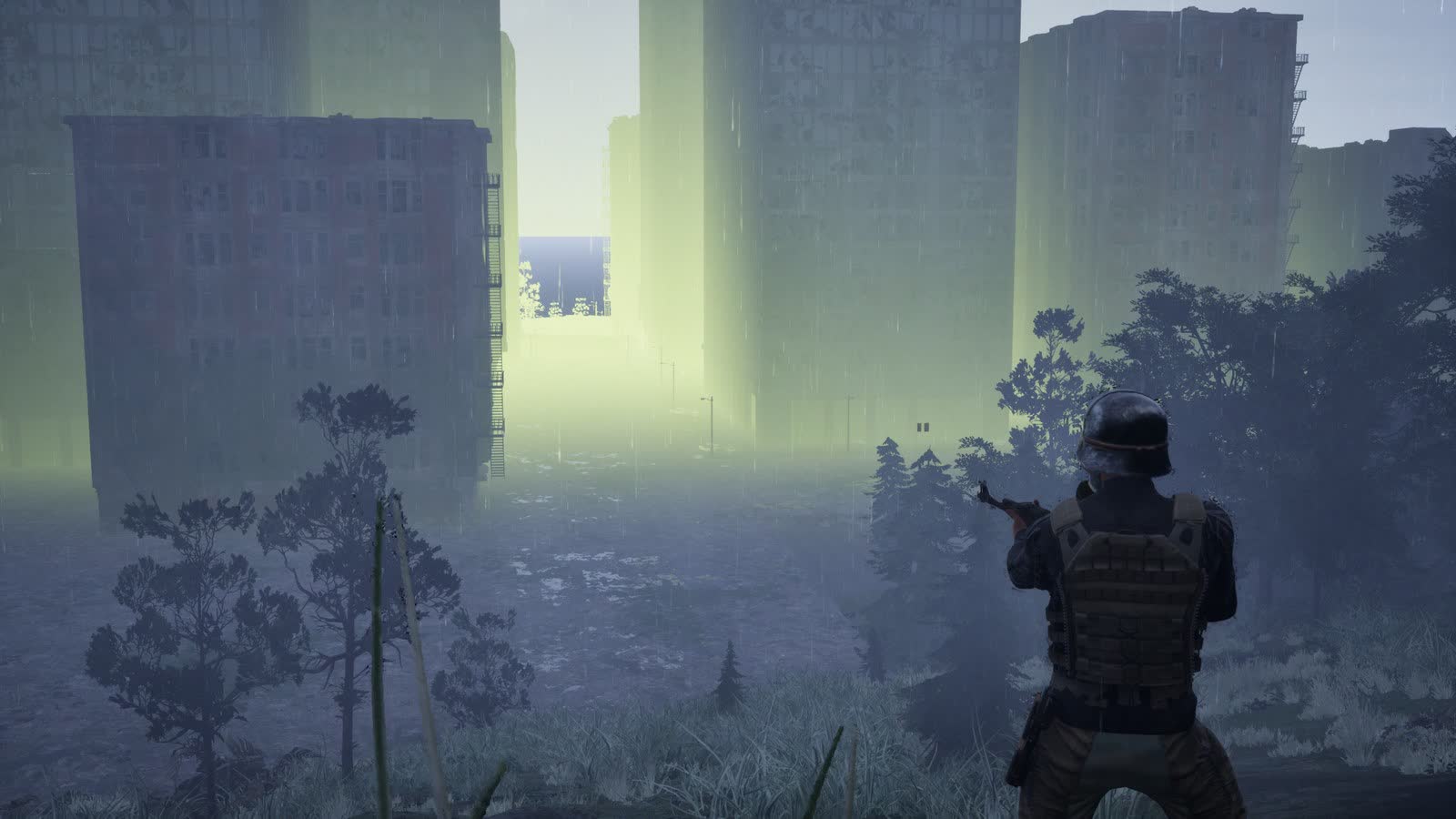
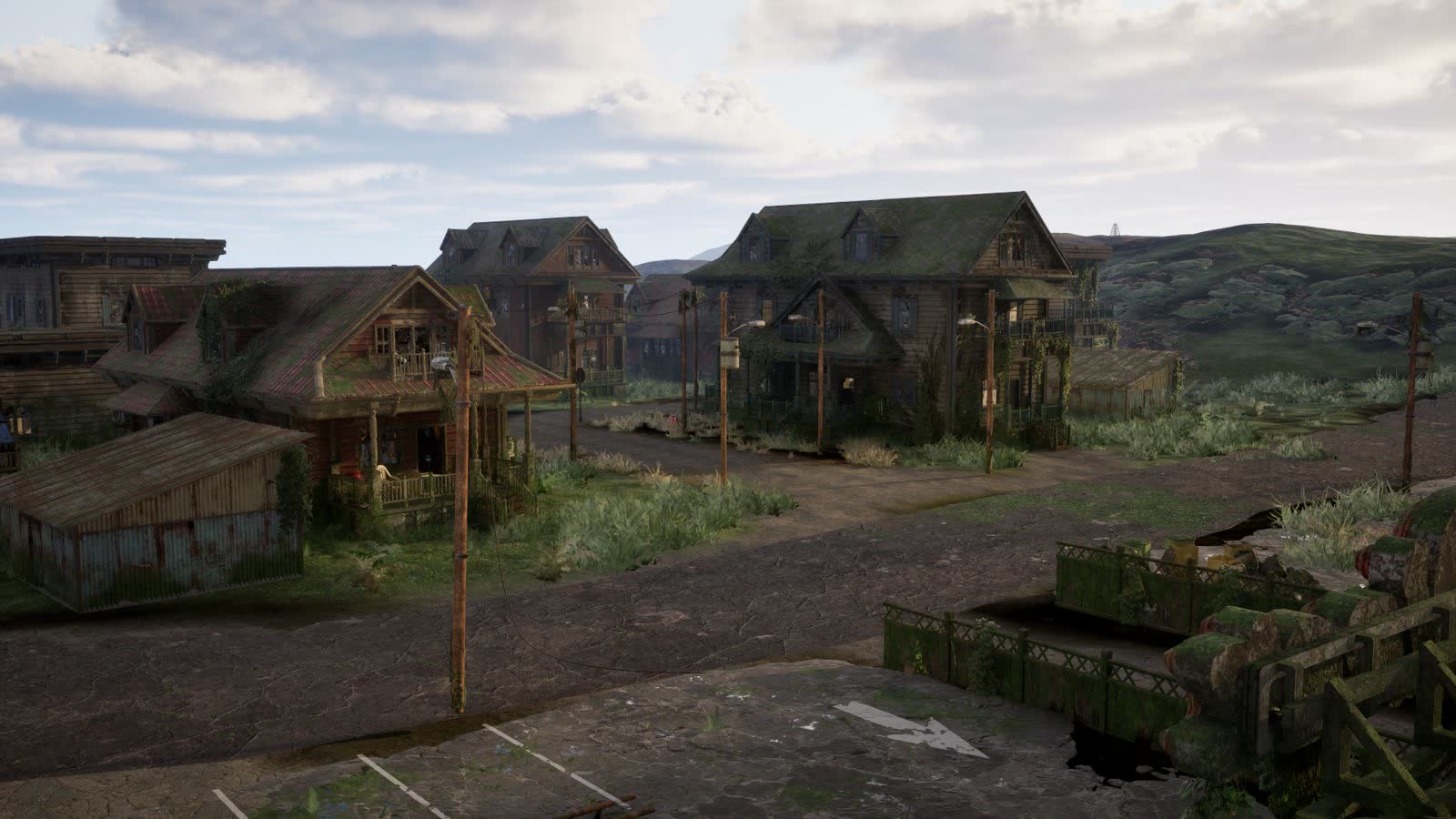
The droids and clones fought until the world fell silent. The forests took it back. The droids' gas still hangs over the richest ground, and it only kills clones.
You're a clone.
Status: early development. Beyond isn't playable yet. This page covers what's built and what's planned, and says which is which. Follow along on the devblog.
The pitch
Scavenge. Build. Fight. Breathe.
Strip ruins for scrap, build your guns part by part, and raise a base worth defending. Push into the gas for the best loot, with every breath of oxygen counting. Get a wrecked car running. And watch for the droids, because they're still out there hunting anything human.
World and setting
The war was between droids and clones. The droid army released a gas that attacks only the clones' nervous systems — it doesn't affect real humans or animals at all. Every player is a clone: the same base model, washed up on the shore with no memory of how they got there. Nobody knows who won the war, or where the clones come from — that's the mystery the game's lore notes, logs and recordings are built around. Clones carry faint memories of earlier clones, which is why old notes and tattoos make sense to a "new" body.
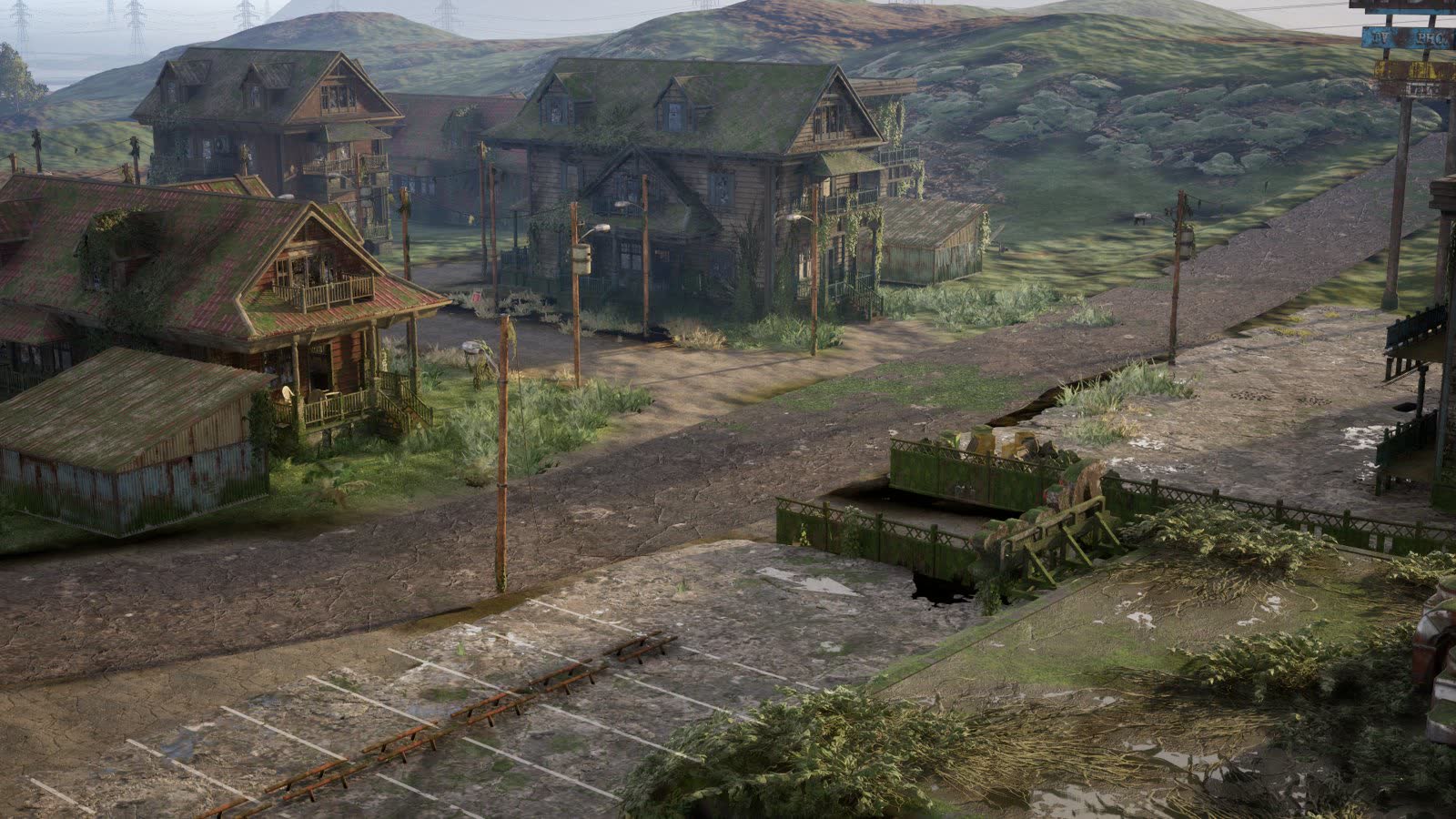
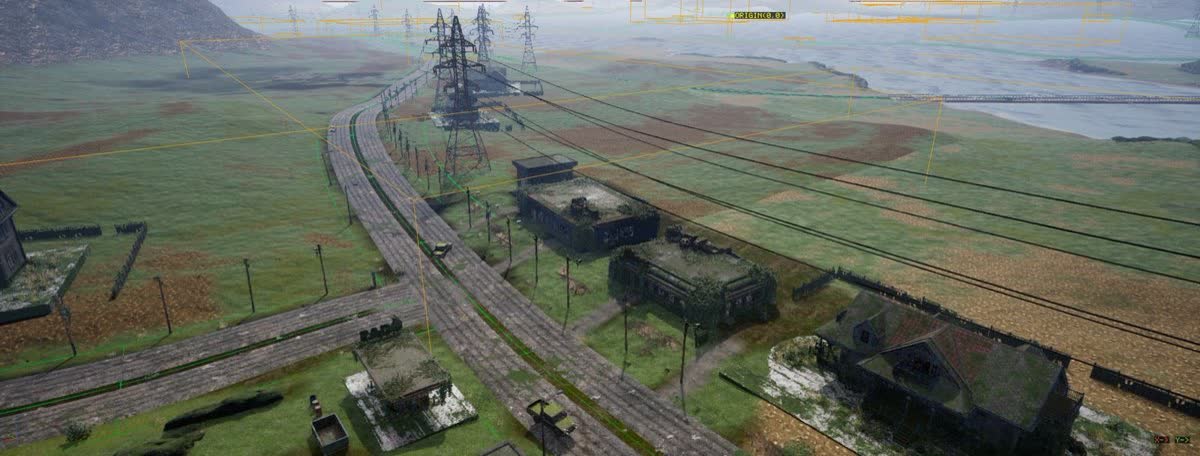
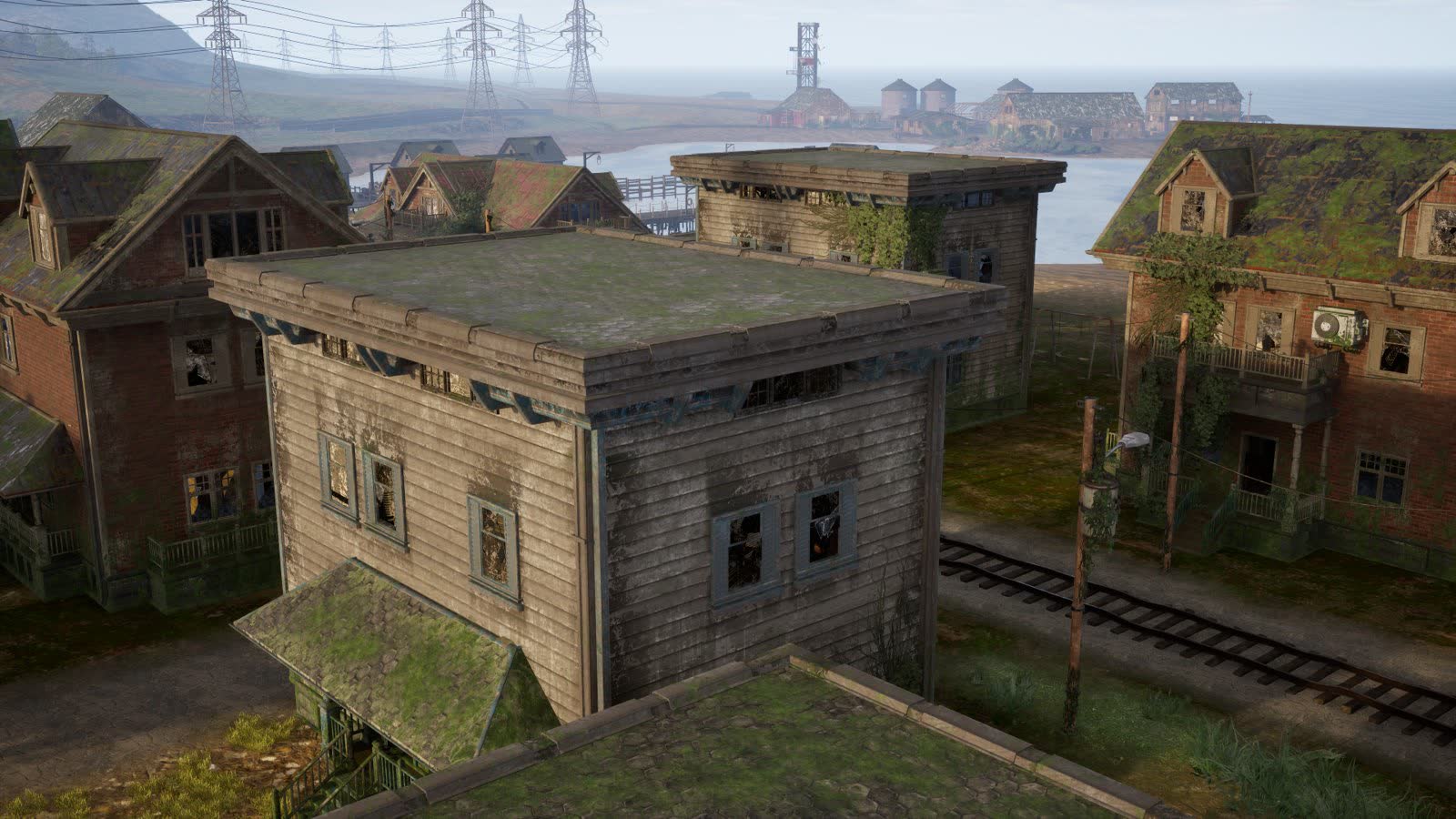
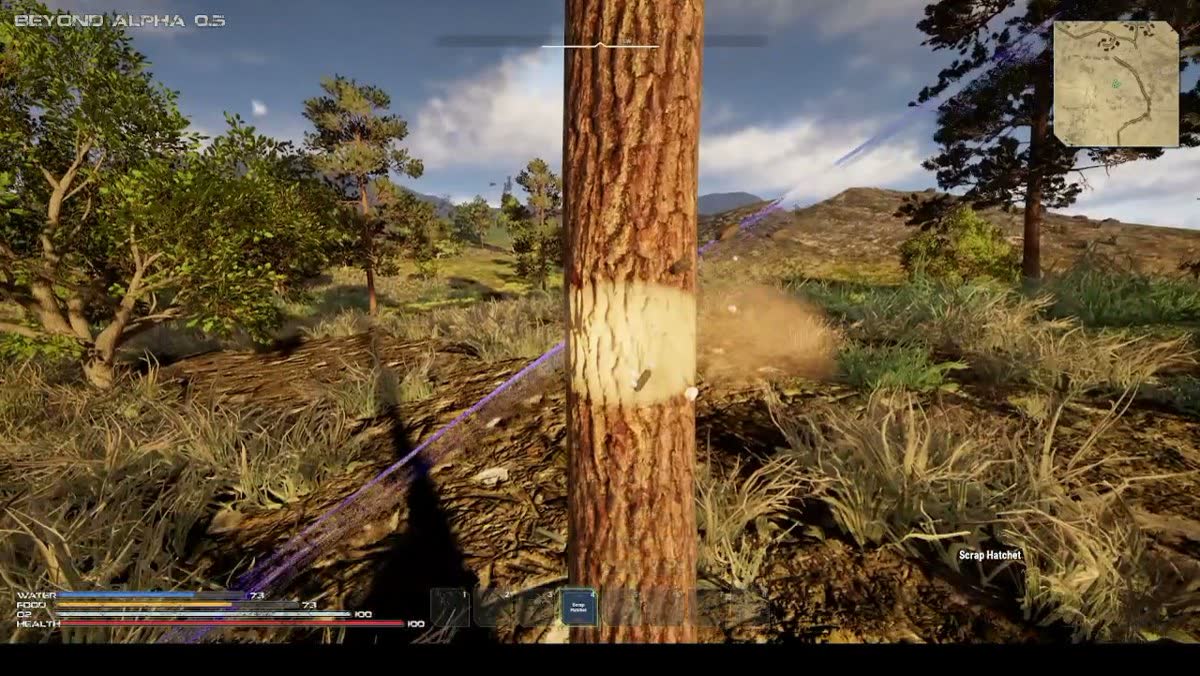
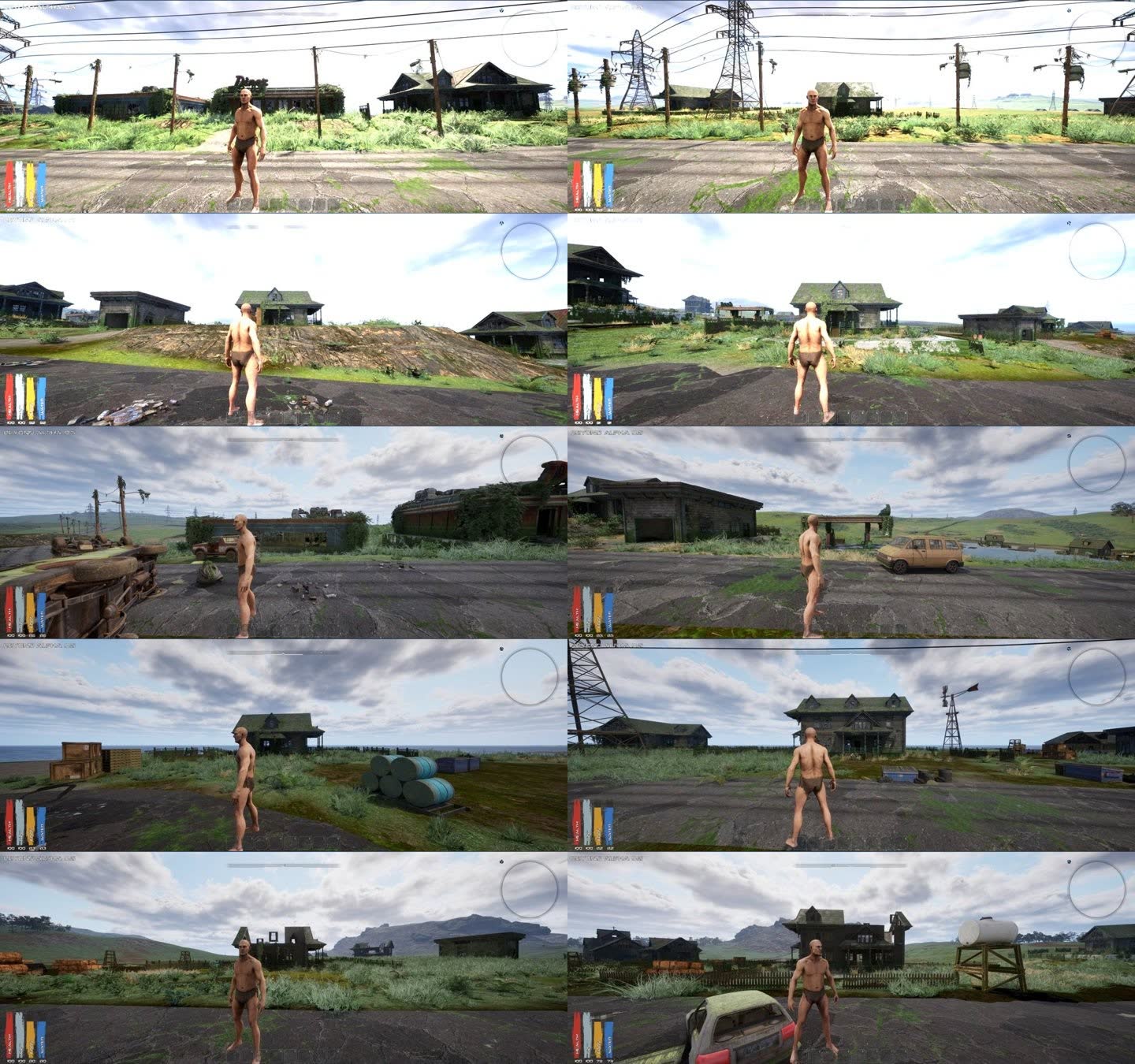
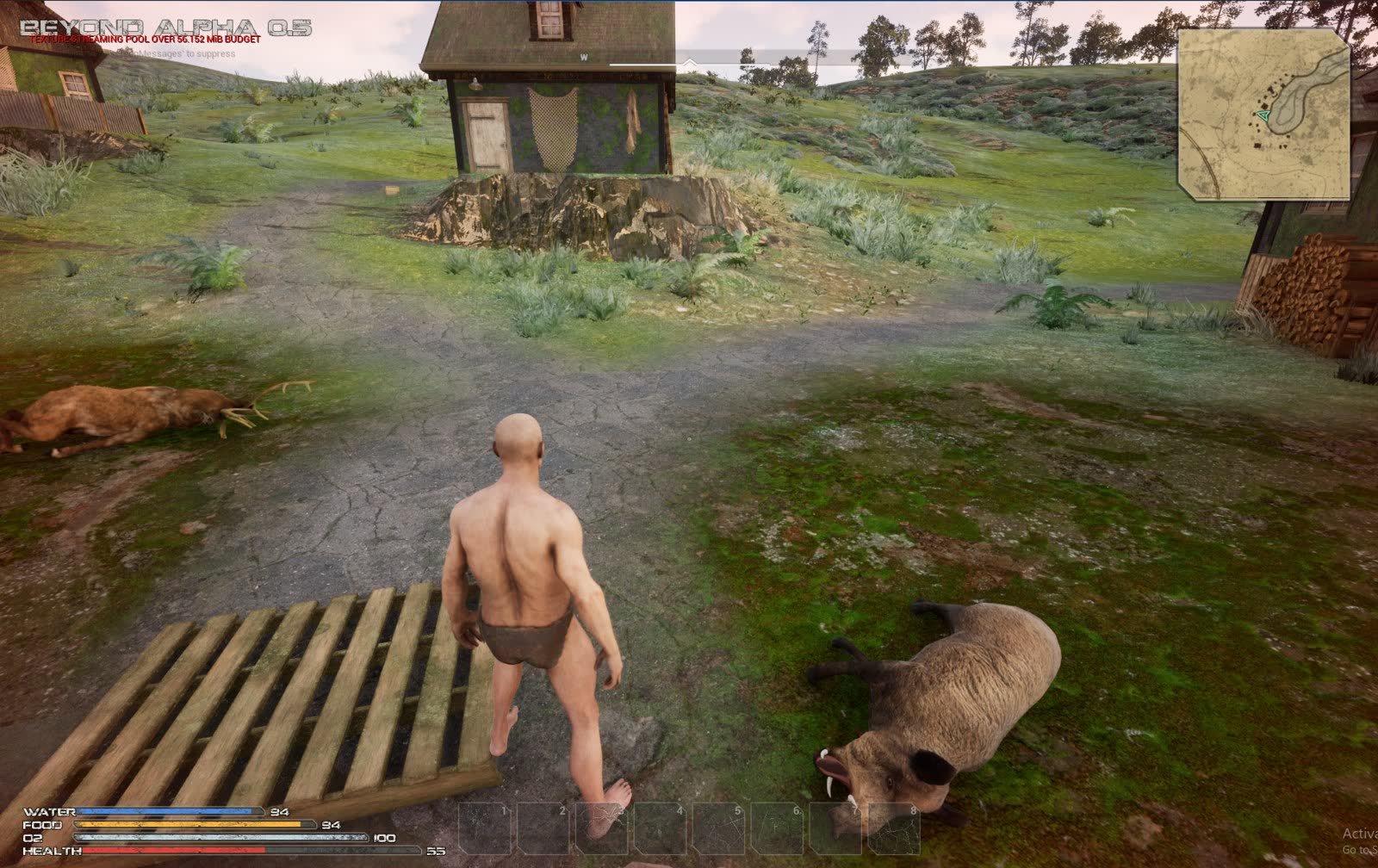
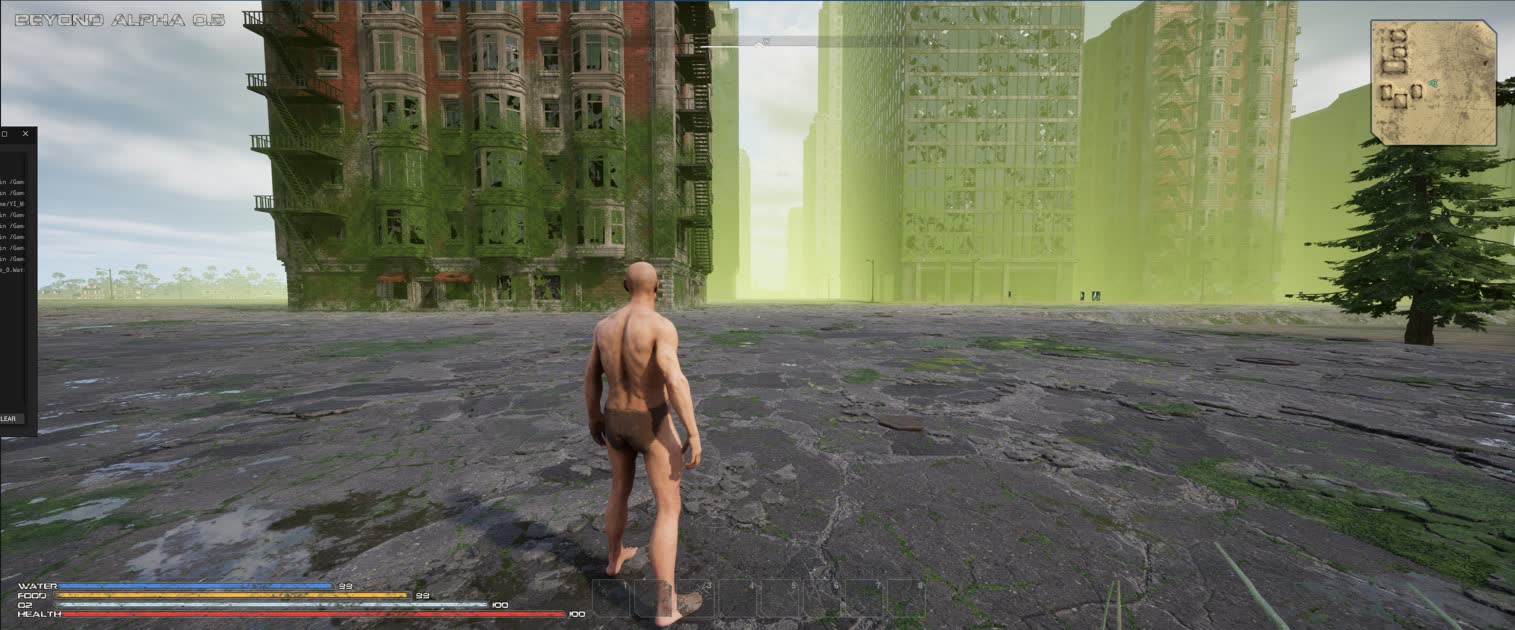
Nature took the world back: dense forests of around 50,000 choppable trees, thinning out toward the roads so driving stays open while walking off-road puts you in real woods, plus wildlife (deer, stags, boar, wolves and bears — wolves and bears are dangerous predators, deer, stags and boar are prey). Droids are still everywhere, left over from the war, patrolling town-to-town routes in armed squads and guarding bases, labs and loot spots. The map's main city sits under a permanent toxic gas storm, visible as a storm wall from a distance, the richest and most dangerous loot zone on the map. Bandits — real, non-clone people — profit off the never-ending war, salvaging the gas zones and taking clone gear to sell. (Status: forests, wildlife, droid town patrols and the city gas storm are built and in testing. Bandits are designed but not yet built.)
Character and tattoos
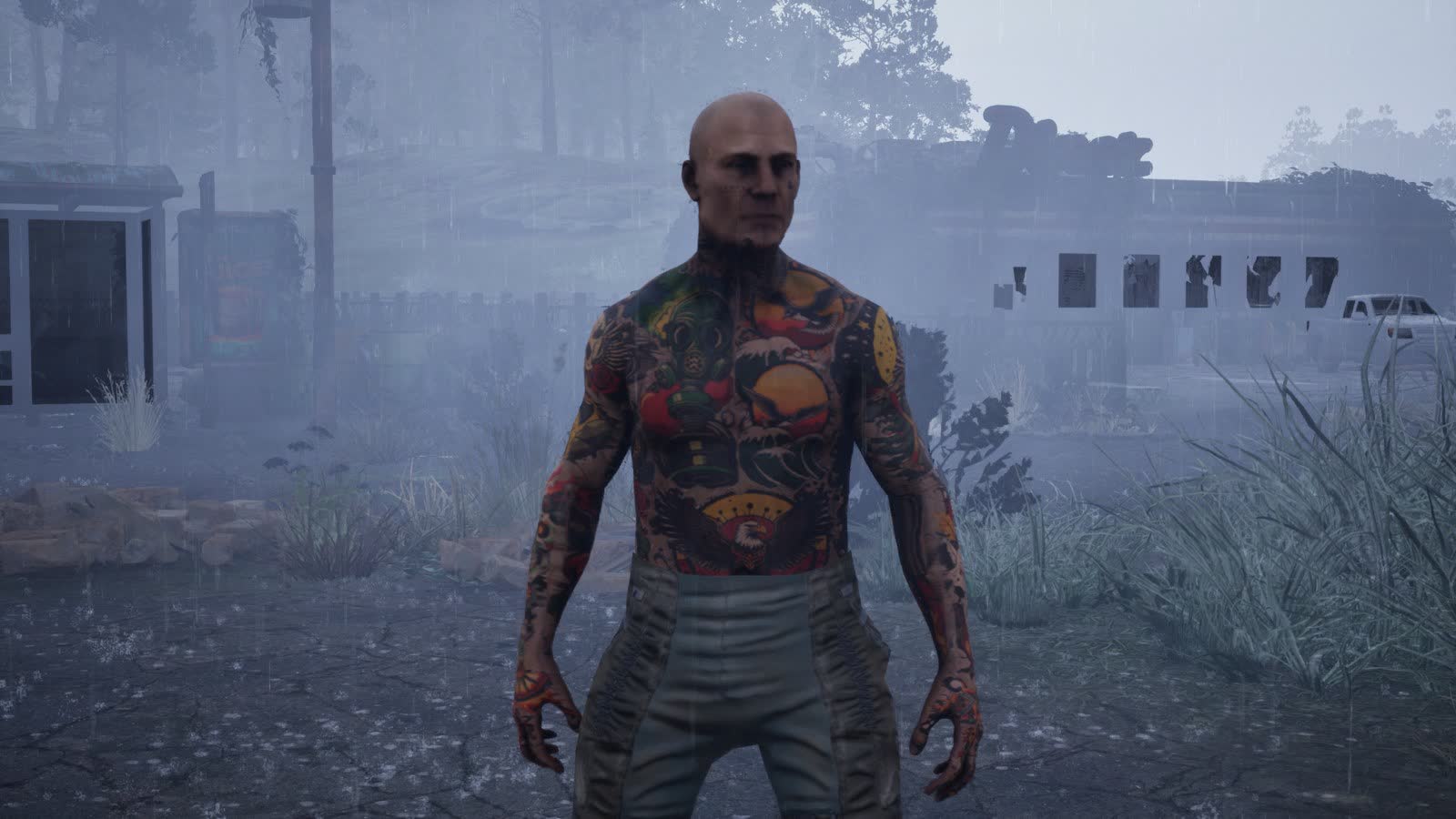
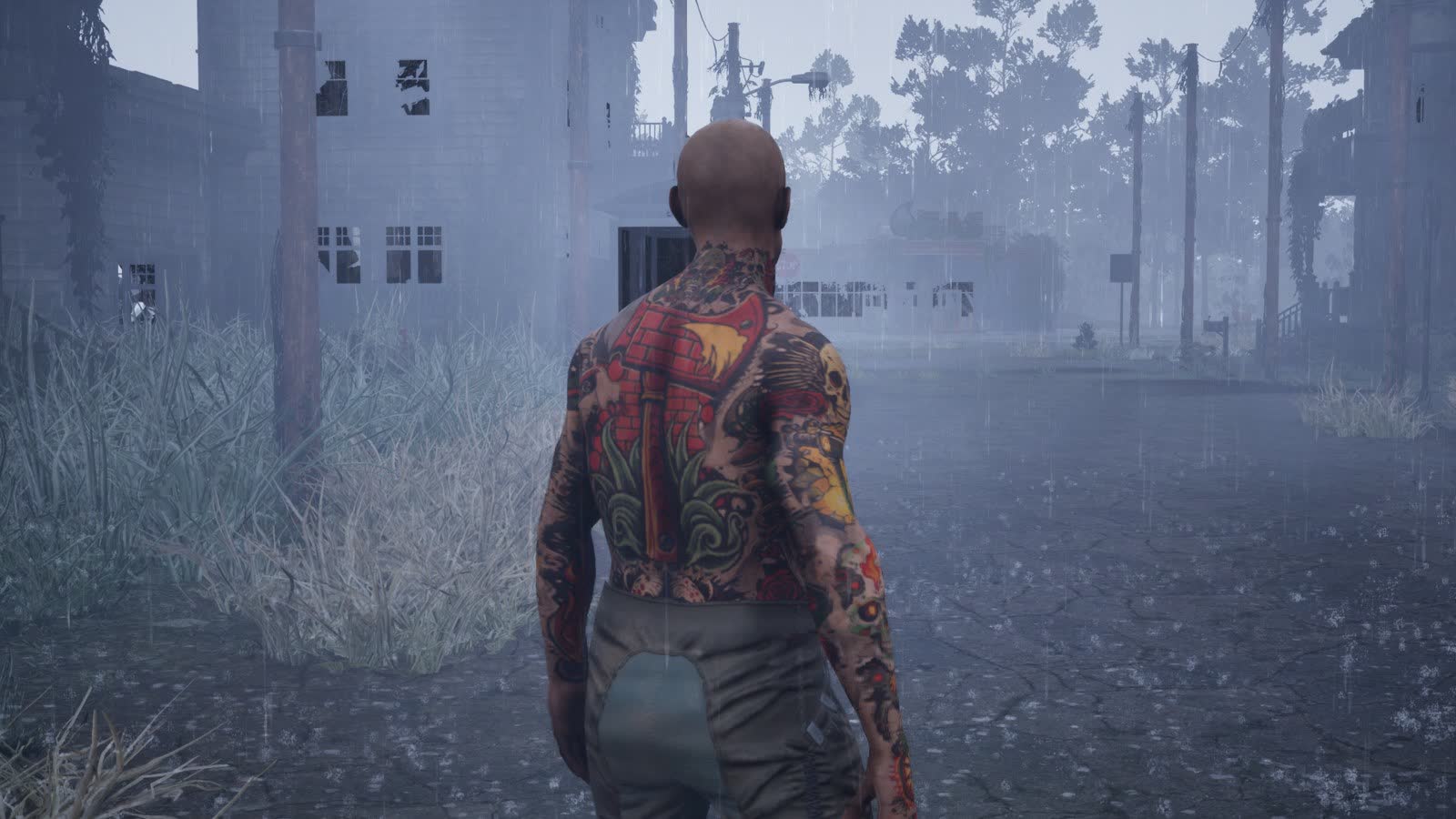
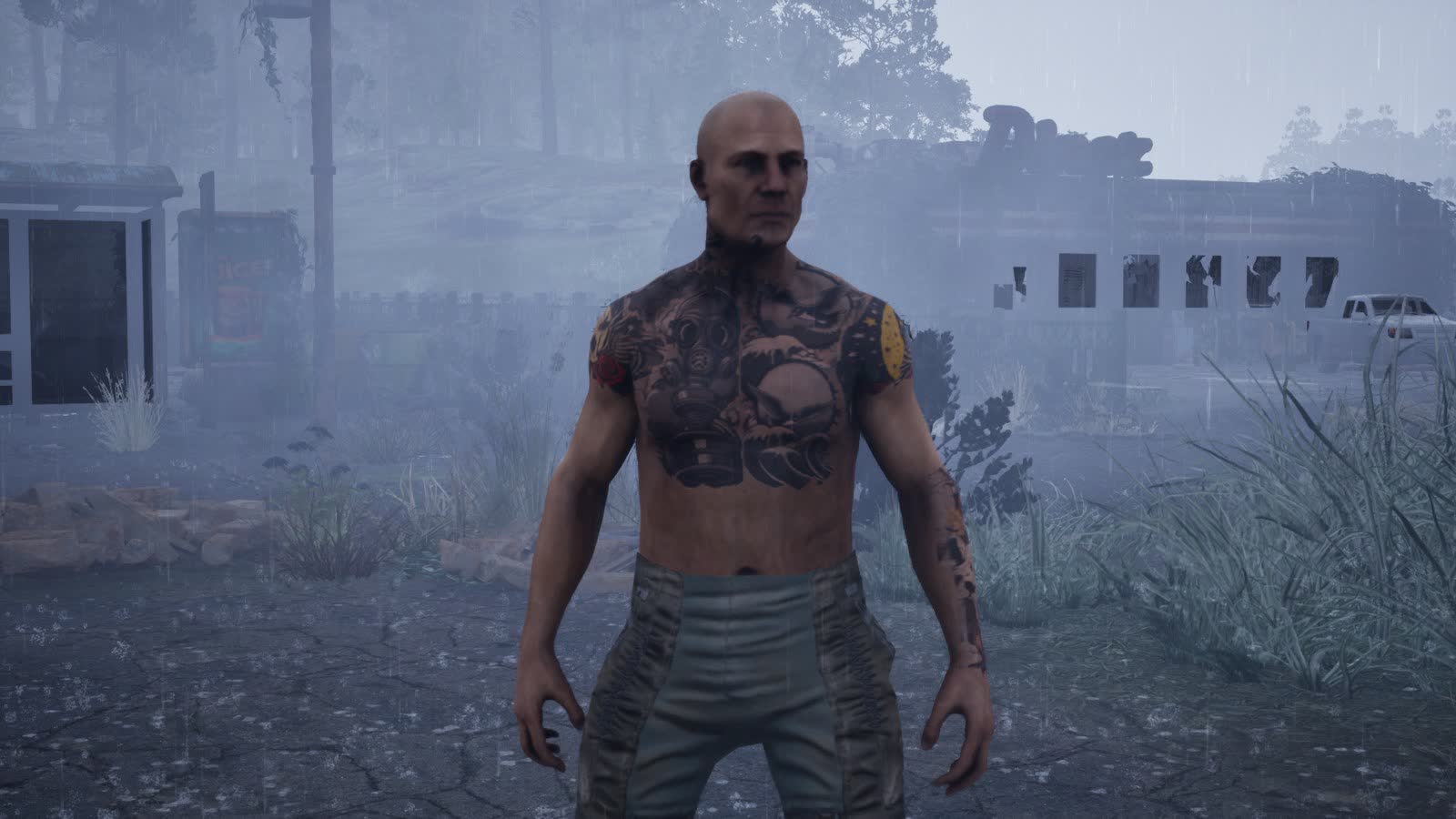
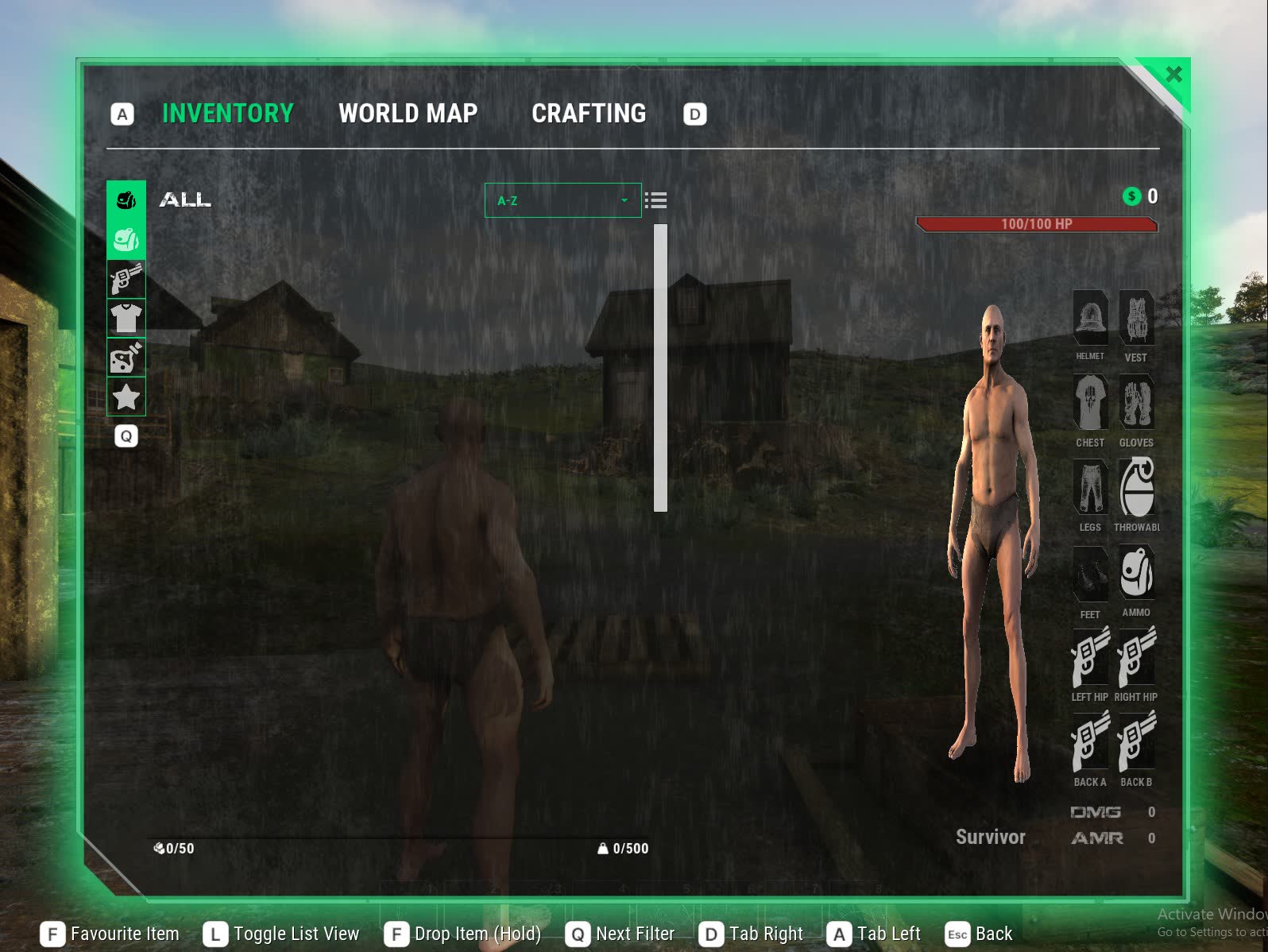
Every clone shares the same base body. You set yourself apart with clothing, armour and masks, plus tattoos earned through play. Some are earned, some are marks you'd rather not have, and you'll have to work out what you did to get them. They stay on your account forever, through deaths and server wipes, and only show where your skin is bare.
The body is split into 36 fitted pieces (chest, back, sleeves, knuckles, legs and a few small face marks), left and right earned separately. Each piece starts as black-and-grey linework and gains colour as you keep at whatever earned it, while black-and-grey smoke grows into the gaps until a veteran wears a full bodysuit. (Status: the base clone character and all 36 tattoos are built and in testing.)
The gas and oxygen (signature mechanic)
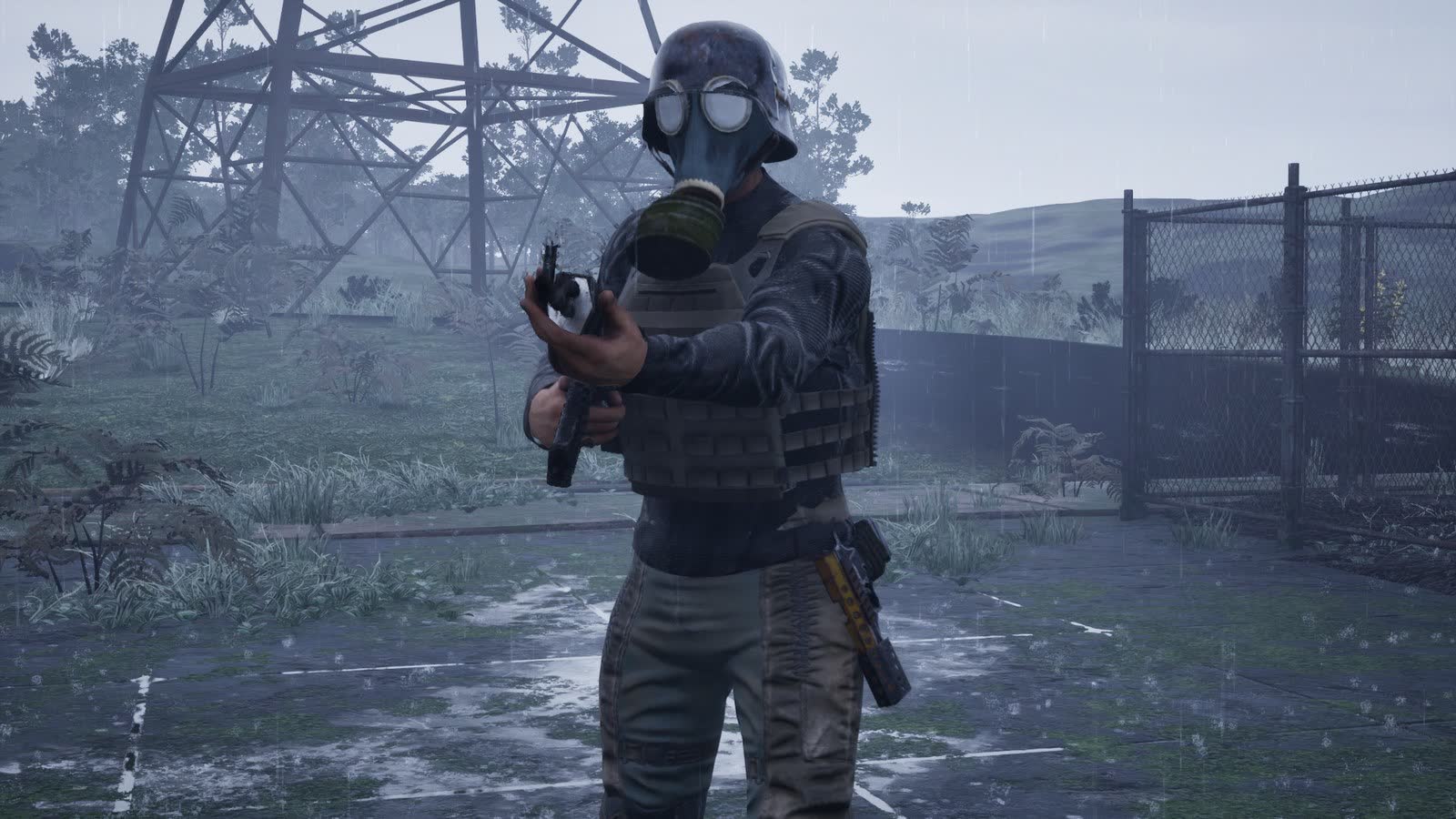
Your oxygen bar drains while you're sprinting and while you're standing in the gas, and refills on its own once you stop sprinting and get clear of the gas. With no mask, a full bar lasts about a minute in the gas — long enough to dash in for something near the edge, not long enough to get greedy. Gas masks stretch that out by tier: a basic mask around 4 minutes, a mid-tier mask around 10, the best masks around half an hour. Run out of air and you start a coughing fit that slows you down and stops you shooting, on a loop until you get oxygen back. Run out of air while still inside the gas and you start losing health too — the gas can kill you.
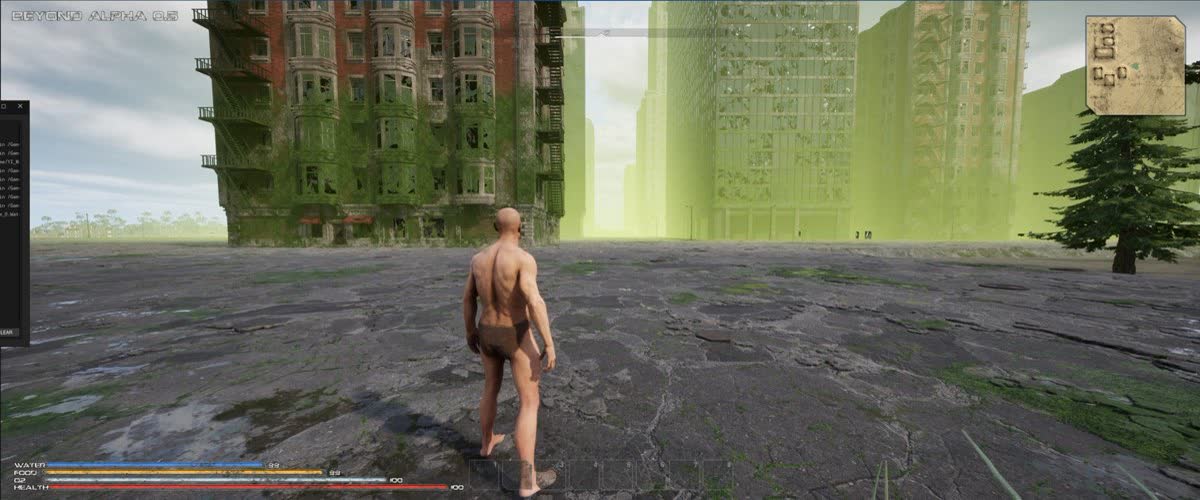
Gas is always a clearly visible fog that thickens the closer you get, with a warning banner as you approach and another once you're inside telling you whether your mask is protecting you. Gas masks put their visor over your view, and as a mask wears down the glass cracks in three stages, bending your view through each shard, with sound cues as it gets worse and audible breathing that speeds up when oxygen is low. Zones are mostly fixed, but a rare gas storm event can temporarily spread the gas further than usual. The best loot is in the gas zones, so there's a constant pull to risk it. (Status: oxygen drain, masks, visor damage and the city gas storm are built and in testing.)
Survival
Hunger, thirst, temperature and toxic sickness all need managing, at a slow pace rather than a hardcore survival sim — a full meal or drink lasts roughly an hour, so it's background upkeep rather than a constant fight. Food and water come from hunting, scavenging, farming at your base, collecting and purifying rainwater, and fishing. Raw meat makes you sick; cooking it at a campfire or stove fixes that, and proper recipes at a Cooking Station add buffs like faster health regen or slower oxygen drain. Crow flocks circle the towns and can be hunted for meat and the feathers arrows need. Footsteps change with the ground under you and carry to nearby players, and the world has its own day and night soundscape and soundtrack. (Status: core needs, cooking, buffed meals, crows, footsteps, ambience and music are built and in testing. Farming is designed but not yet built.)
Combat
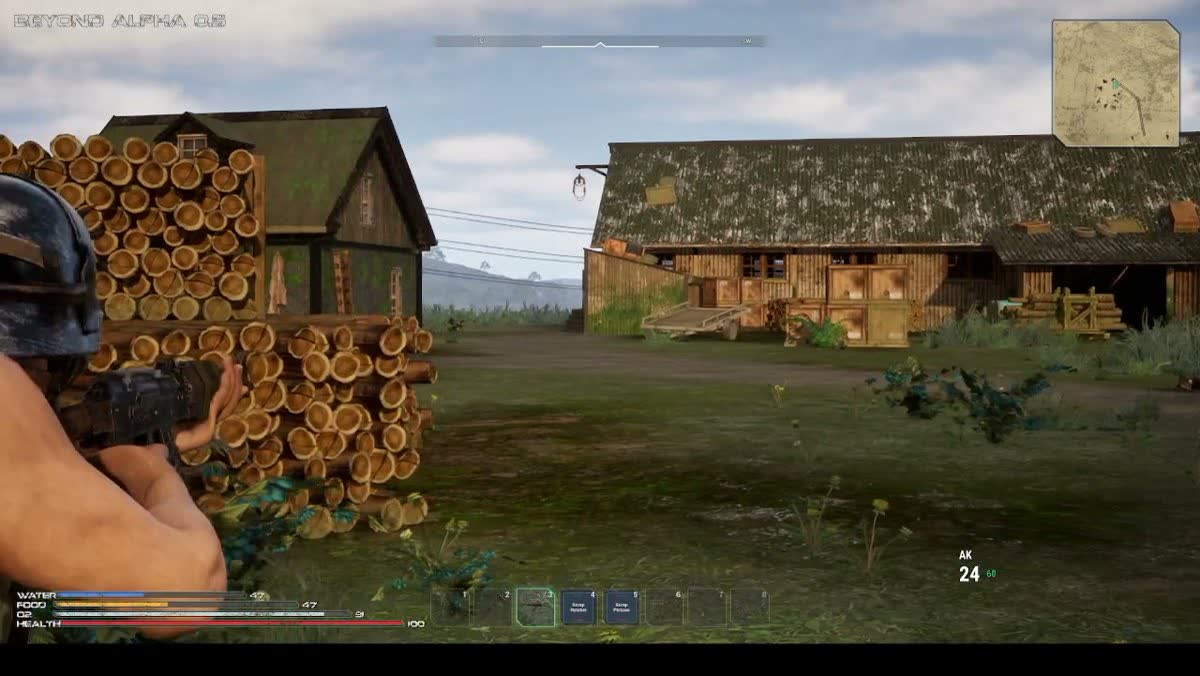
Damage is tracked by body part — headshots kill, leg hits slow you down — alongside injuries like bleeding and broken bones that need treating with bandages, splints or a rare medkit. At zero health you go down wounded rather than dying outright: you can crawl, a teammate can revive you, or you can self-revive with a medkit, but an enemy can also finish you off and loot you while you're down.
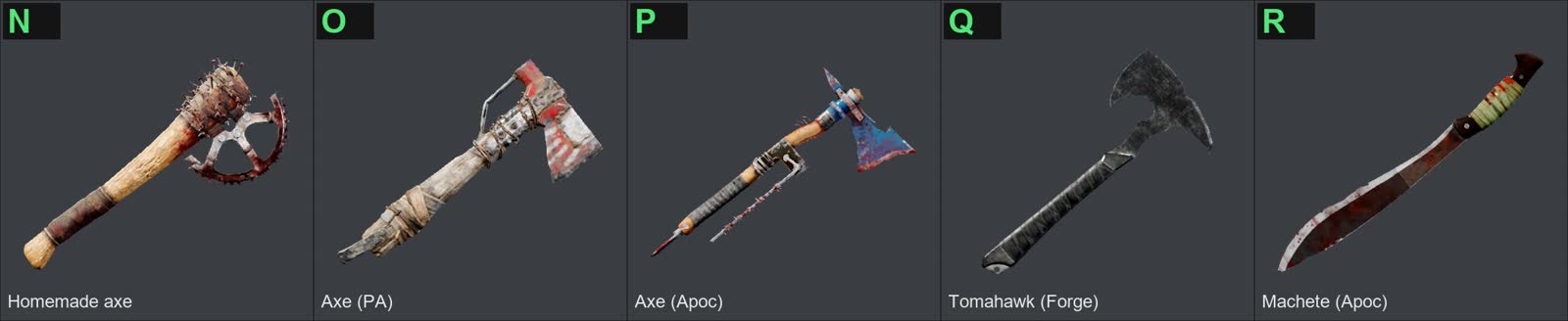
Weapons range from crude and improvised up to military-grade, in four ammo families (light, heavy, shotgun shells, arrows/bolts), each craftable in quality tiers from handmade up to armour-piercing (which can only be found, not crafted — making it rare and valuable). Melee covers a 25-weapon roster of blunt weapons and blades in Scrap, Forged and Military tiers, craftable, found in loot and on bandits, and recyclable.
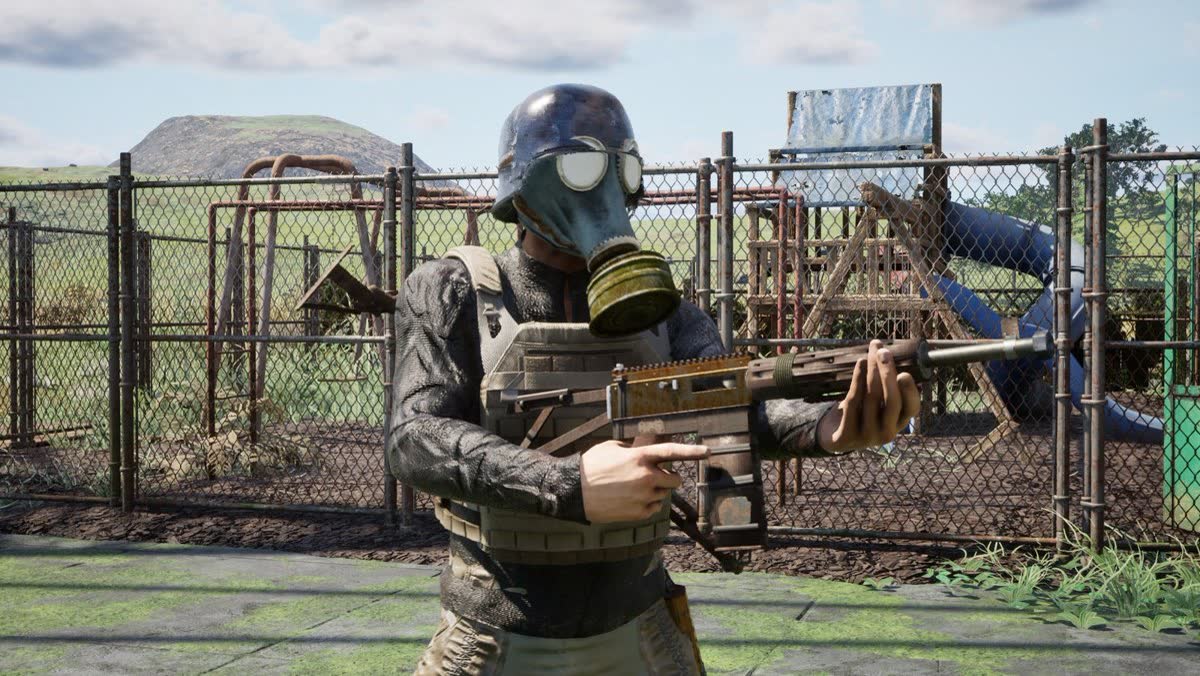
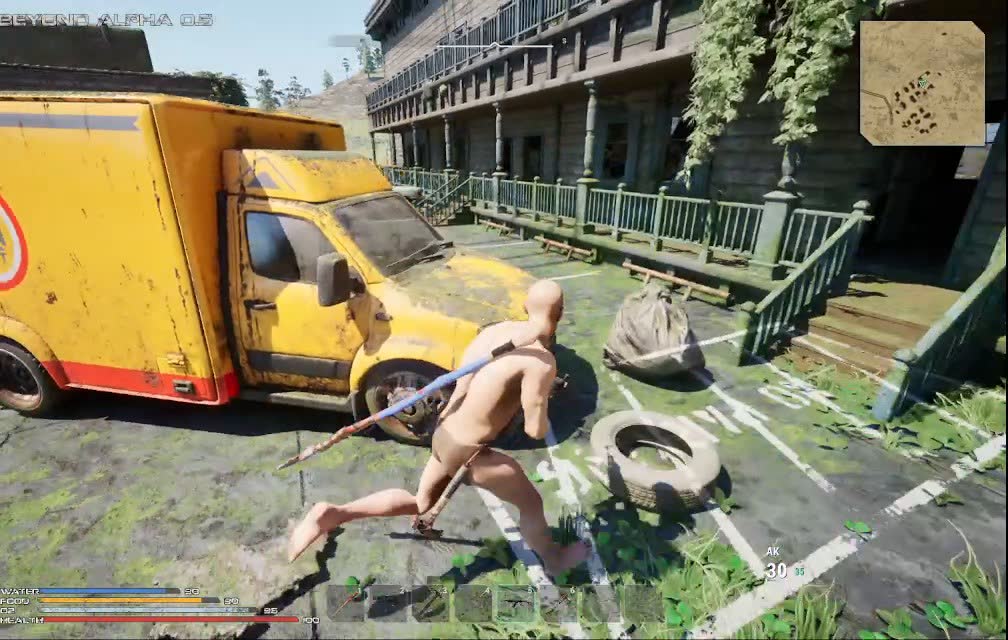
Guns are built from parts, not picked up whole. The AK and a scrap-built M4 rifle are both assembled this way: barrel, handguard, receiver, magazine, grip, and optional stock, sights and under-barrel attachments, with every part coming in Scrap, Forged and Military tiers that all fit together. Part tier affects handling, damage, range and reliability, so a gun can be a patchwork of tiers: a rare Military part is worth hunting for even on a gun you already own. Both platforms' scrap parts turn up side by side in loot, and the M4's scrap parts can also be crafted at the workbench. A compound bow built from scrap is in as the first quiet weapon, with arrows craftable by hand or at a bench. (Status: the AK and scrap M4 platforms and the part-swapping "Modify" window are built and in testing; fire rate, aim speed, reload speed and draw speed responding to part tier is planned but not yet wired up. The scrap bow is built and in testing. Other platforms — pistols, SMG, shotgun, sniper, crossbow, harpoon — are planned.)
Scavenging, crafting and building
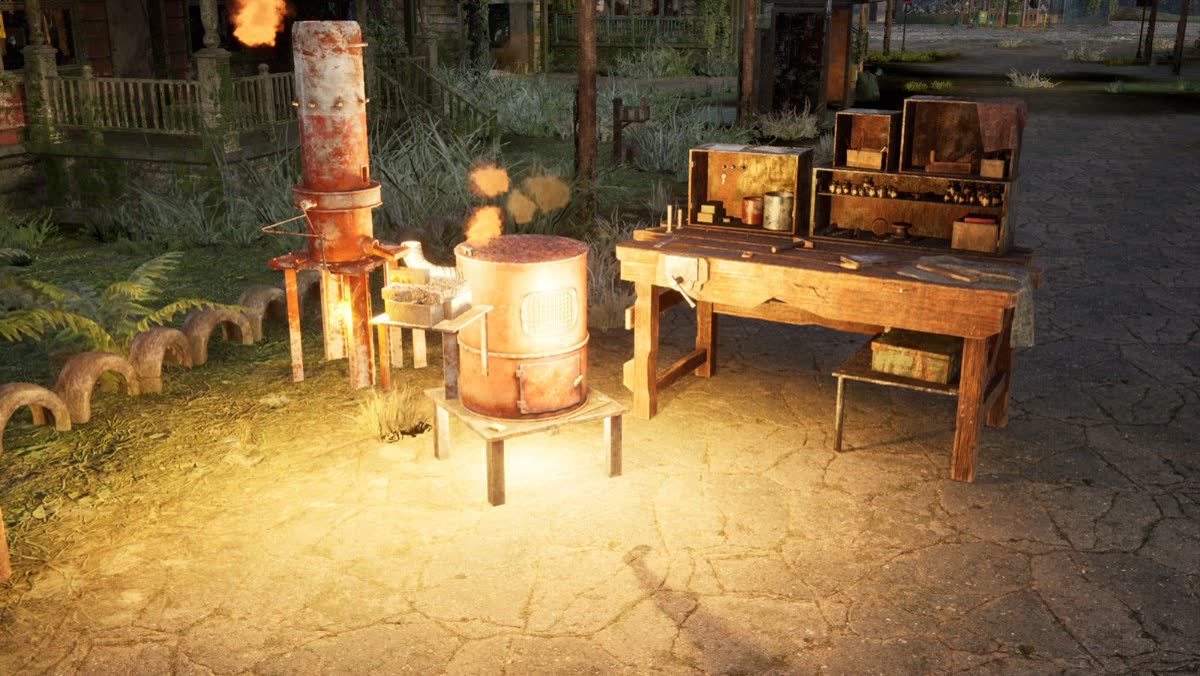
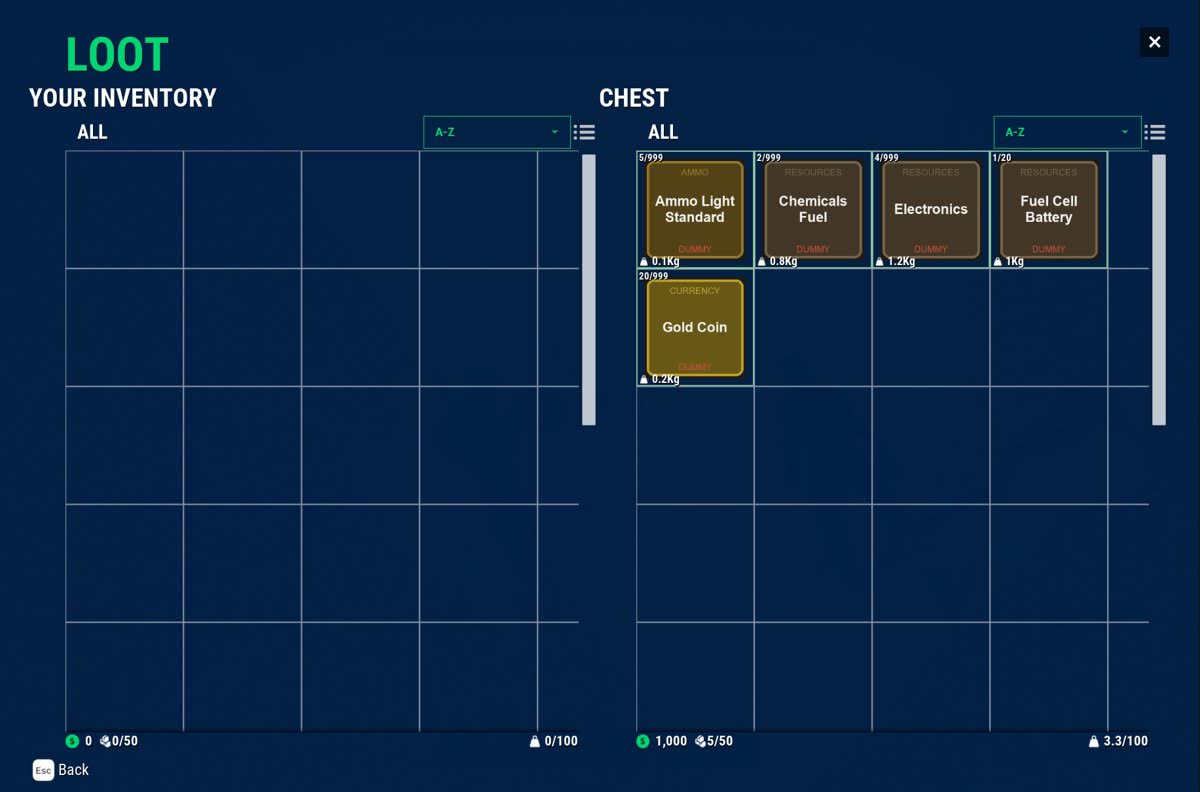
Start with nothing. The first job is finding scrap metal and other resources in ruins and forests to craft your first tool; from there it's gathering wood and stone, crafting, and putting up a first shack. Basic items craft from your inventory; better gear and refining need stations you build — a workbench, an advanced workbench, a furnace, and more — each with its own running cost (fuel or propane) once you've built past the basics, with its own queue of up to 5 items and a 5-slot output that keeps working while you're away. Crafting recipes you need are physical blueprint items found in loot, not a skill tree, which means they can be stolen in a raid — and a blueprint is never used up, so keeping one safe in a fuelled Jammer cabinet unlocks its recipe for your whole team nearby.
Gear up by dragging and dropping: drag armour or clothing off your body to take it off, or onto a slot to put it on; drag weapons on or off your hotbar, which stays visible while the rest of your inventory is open. A drop spot glows green if it'll take what you're holding, red if it won't.
Building uses snap-together pieces — foundations, walls, doors, windows, stairs, roofs, gates, ramps, railings and more — in four tiers from wood through stone and metal up to armoured, built with a dedicated Building Plan tool and repaired or upgraded with the hammer. Every base needs a Jammer cabinet, powered by fuel cells found only from droids and ruins, to hide it from droid patrols; let it run dry and a hunter squad comes to break in. Raids can only happen during set "raid window" events — gas storms that sweep the whole map, making PvP active everywhere outside droid areas and the trader train. (Status: building, loot, crafting with real recipes and queued benches, and the Jammer/power systems are built and in testing. Base raiding during raid windows is designed but not yet built.)
Vehicles
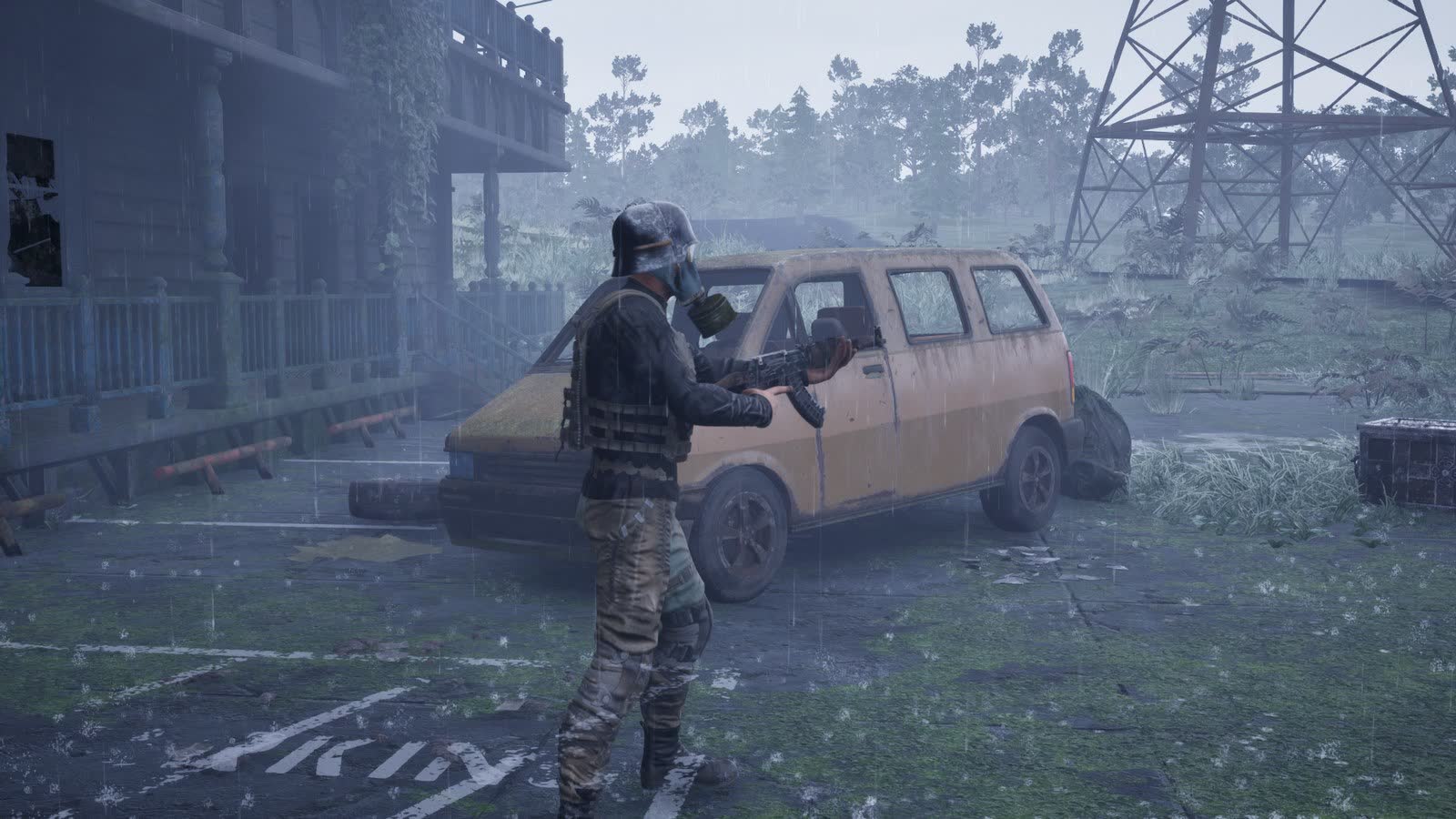
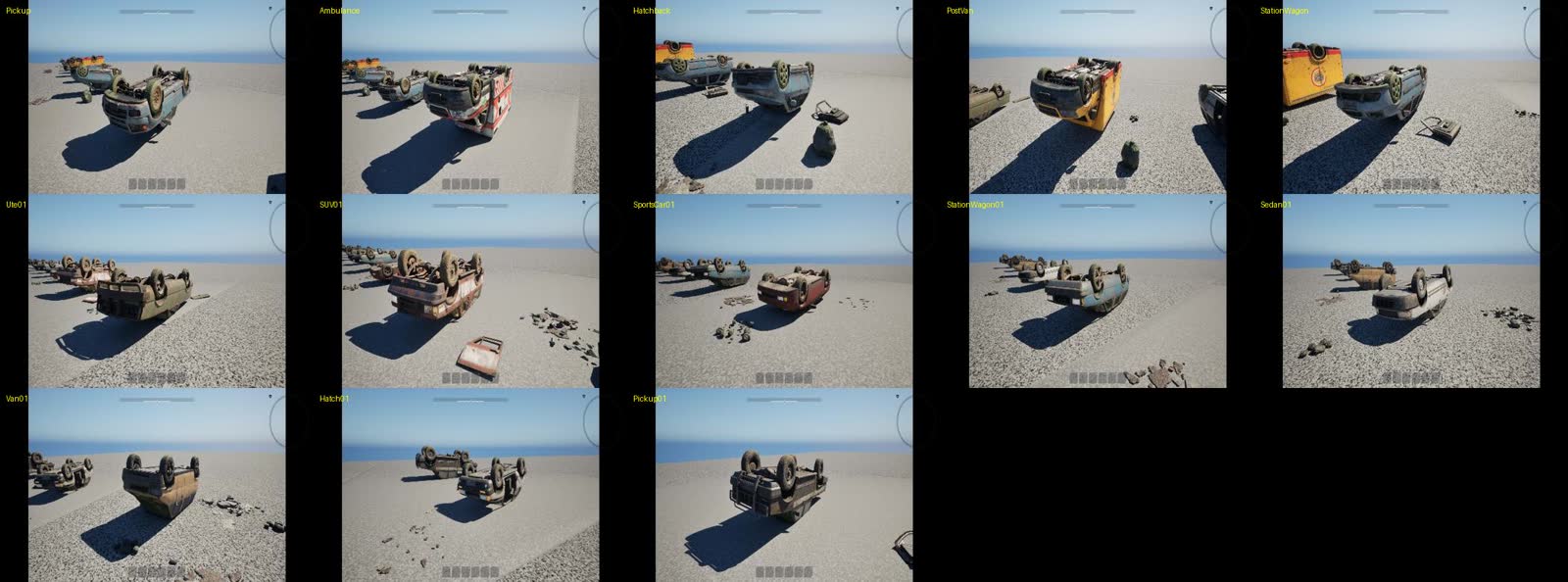
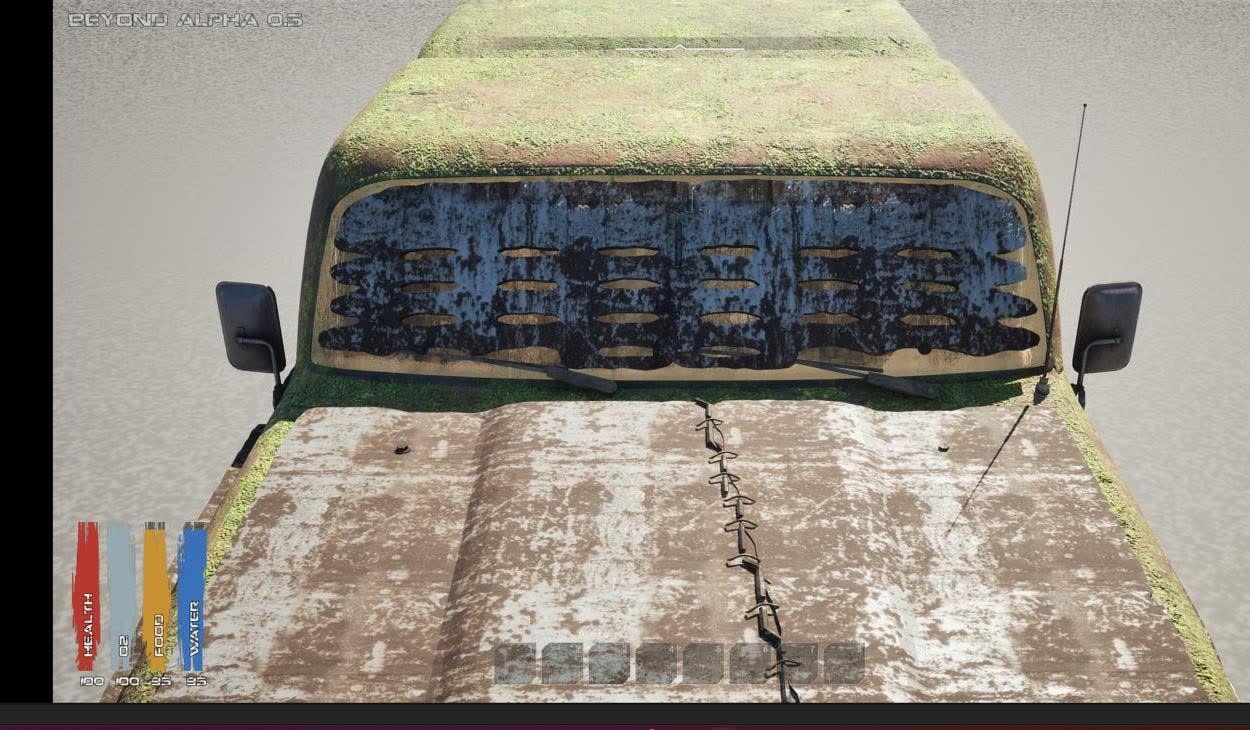
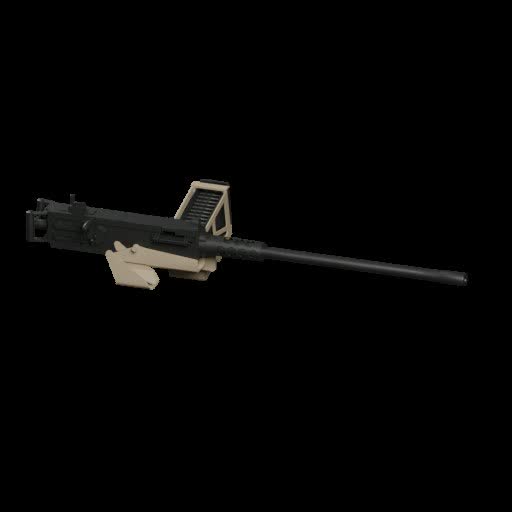
Vehicles can drive into the gas and act like a partial mask, reducing the oxygen drain without stopping it. Find a wrecked car on the map and repair it with scavenged parts to get it running; repairing it gives you a key, and whoever holds the key can drive it (it can be stolen, or hotwired to cut a new key). Cars need fuel, refined from chemicals, and take real crash and combat damage that can be repaired. They can be armoured panel by panel — doors, bonnet, boot, windows — each plate crafted and bolted on separately, cutting incoming damage once a car is fully plated. A full roster of 13 car models is in the game, each with correct seat heights and a driver who holds the wheel and turns it with your steering input, in first and third person. Headlights and light bars cast real light with a toggle key, repaired wrecks get working lights, and tail lights only come on together with the headlights. The roster also includes roof racks, bull bars, off-road wheels, and a mounted .50 cal gun for utes and pickups. (Status: all of the above is built and being tested. Motorbikes, boats and other vehicle types are planned but not built.)
Droids and bandits
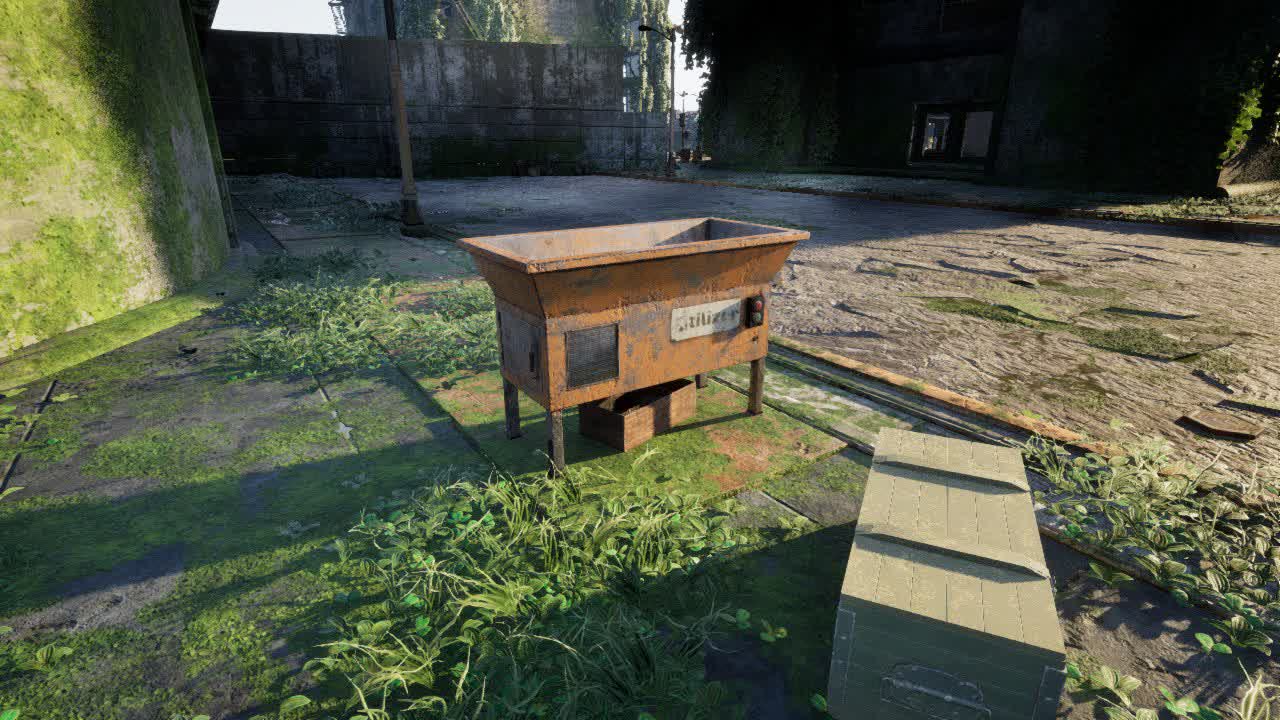
Droids left over from the war guard bases, labs and loot spots, and roam in hunting patrols — currently looping between towns across the map — that attack any human on sight. They have weak points — a sensor eye, a power core — worth aiming for, and heavier droids need armour-piercing ammo to crack. Bandits are real people, not clones, who hold the gas zones and occasionally raid out of them; the gas doesn't affect them at all, so they need no masks. (Status: droid town patrols are built and in testing; bandits are designed but not yet built.)
Other systems (planned)
- Trader train: a safe-zone train that loops the map on rails, stopping at
stations as a safe place to trade, repair and recycle.
- Clans and teams: small teams for the early build, full clans later.
- Weather and day/night: built and in testing — a day/night cycle and five weather
types (clear, cloudy, fog, rain, thunderstorm) blend into each other on their own.
These are part of the design and some groundwork exists, but they are not yet playable features — treat anything in this section as a direction, not a promise of what ships in the demo.
What this page will not do
We won't claim something is "tested" unless it's actually been tested, and we won't promise release dates, prices or features that aren't built or clearly labelled as planned. This page will be kept up to date alongside the devblog as Beyond develops.
Built with
Beyond is built in Unreal Engine 5, by Dagger Industries, a one-studio team based in Brisbane, Australia.
More screenshots
Pulled from devblog updates as the game is built — see the devblog for context on each one.
Follow Beyond
Want to back development now? Our Patreon funds the day-to-day work, with devlogs and behind-the-scenes posts in return.