
Devlog #1 — Clones, gas masks, and the first steps into Beyond
I've started building Beyond, a first-person survival shooter set after a war that nobody really won. You wash up on a beach with nothing, not knowing where you came from, in a world where the air itself can kill you. This is the first post about actually making it.
Why this game
I like Rust. I like the tension of knowing the best loot is also the most dangerous place to be, and the way a server can turn from quiet scavenging to chaos in the space of a gunshot. Beyond borrows that bone structure — scavenge, craft, build, defend — but swaps the setting: an overgrown world left behind by a war between machines and clones, where a lingering gas cripples anyone who isn't fully human. You play a clone. Every clone is the same person, washed ashore with no memory of how they got there, which gave me an excuse to make character customization mean something — your tattoos, scars, and gear tell your story because your face never will.
What's actually working
The first real system is in: oxygen and gas. There's a meter that drains while you're sprinting or standing in the toxic fog, and it refills again once you're clear of both. Walk into gas with no mask and you've got about a minute before you start coughing, stumbling, and eventually taking damage. It sounds simple written out like that, but getting the drain rate to feel tense without feeling unfair took some fiddling — too fast and it's just annoying, too slow and the gas stops mattering.
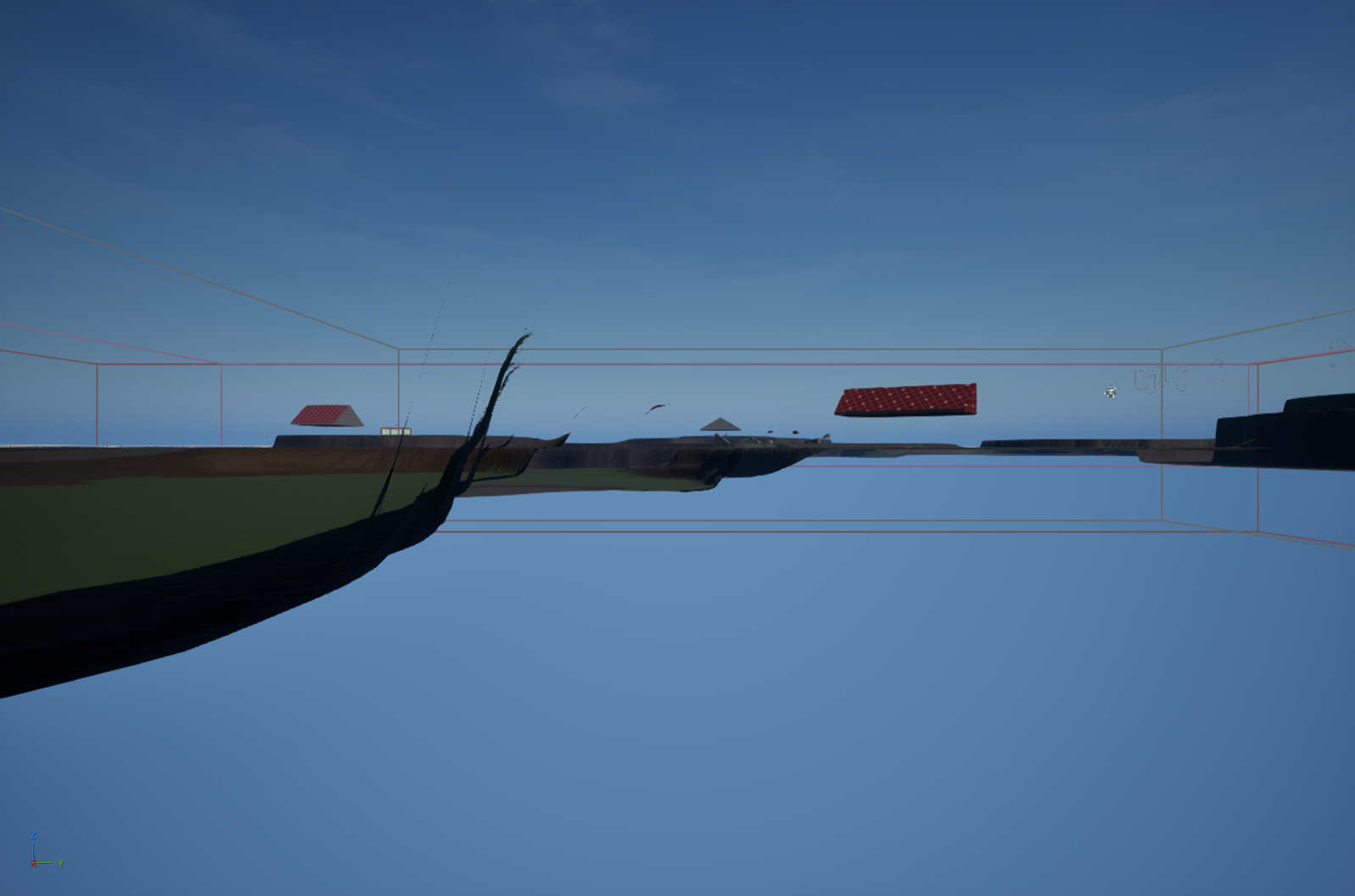
I built it as a separate add-on rather than bolting it directly onto the base game systems, mostly so future updates to the underlying framework don't wipe out my work. Early on there was a bug where the oxygen system would start watching the player before the player had actually spawned, which led to some confusing test runs where oxygen just didn't do anything. Fixed now.
A hotbar, finally
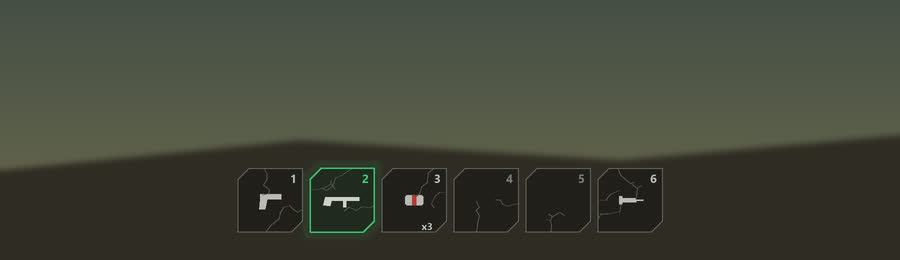
Six slots, keys 1 through 6, Rust-style. When you pick something up it drops into the first open slot; pressing a number draws or holsters that item. I wanted it to look a bit broken-in rather than clean and modern, so the tiles are see-through with cut corners and a cracked look, and the active slot glows a sickly green. All drawn in code rather than built from image assets, which keeps it lightweight and easy to tweak later.
Weapon tiers
I settled on four tiers for gear: Scrap, Forged, Military, and Prototype. Scrap is exactly what it sounds like — pipes, tape, and desperation. Forged is a step up, things a half-competent survivor could actually weld together. Military is leftover hardware from before everything fell apart. Prototype sits above all of that: rare, semi-advanced gear that's found rather than built, and worth fighting over when you see it. This tier list is going to shape everything from the guns to the armor to what you find in the most dangerous parts of the map.
What's next
The building system is next on the list — foundations, walls, the whole Rust-style base-building loop, along with the "Jammer" that hides your base from the droids as long as you keep it fueled. After that: making the droids themselves dangerous, filling out the gear tiers properly, and eventually a trader train that loops around the map as a moving safe zone. It's a lot, but the bones are starting to show, and that's always the best part of a project — when it stops being a design document and starts being something you can actually walk around in.
More soon.
Loading comments...