
Devlog #3 — Stone walls, loaded crates, and thirteen cars on the road
This update is less "look at the shiny new thing" and more "the actual game is forming underneath it." Building got a second tier, loot got spread across the whole map, crafting grew from a wishlist into 71 working recipes, and thirteen cars went from reference images to sitting on their own tyres in the editor. Nothing here is a tech demo — it's all live in the project, compiled and (mostly) tested.
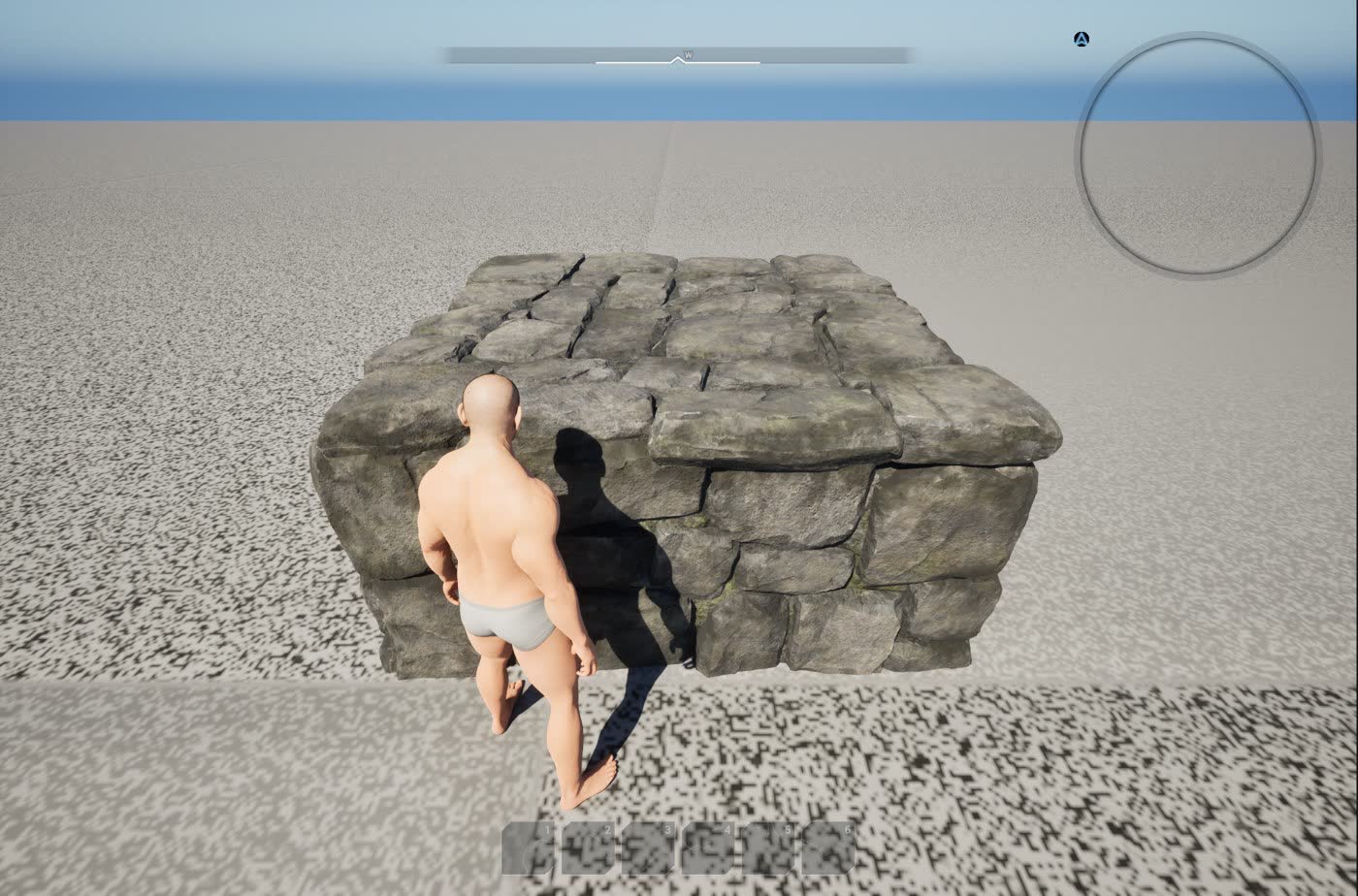
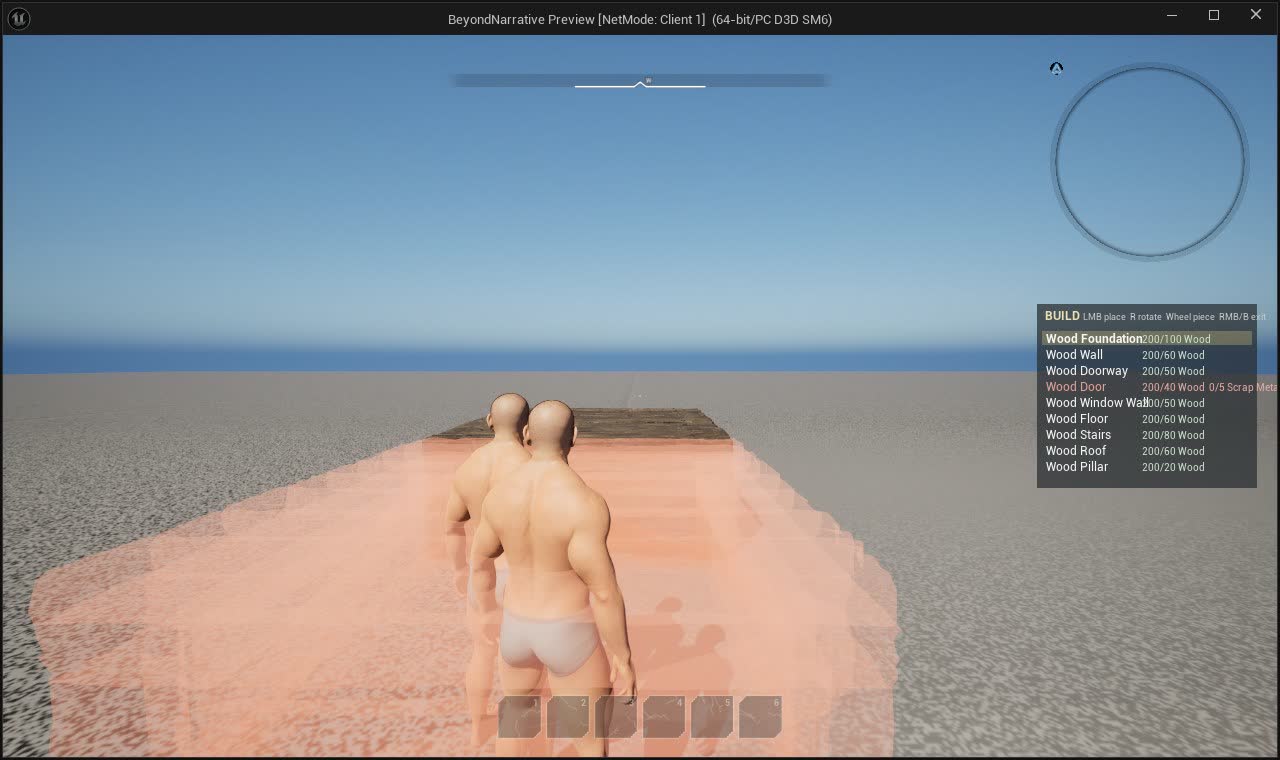
Building: now in stone
The base-building system can place, repair, and destroy pieces, and now upgrade wood structures up to stone. I tested the full loop — place a foundation, let it take damage, repair it, upgrade it, knock it down again — and it all behaved. I also ran it with two players on the same server, one as host and one as a connecting client, and the client could place pieces and pay the resource cost correctly. That matters more than it sounds: a lot of building systems look fine solo and then fall apart the moment a second player is involved, because of how Unreal replicates ownership and state across the network. This one didn't.
Loot, now on the actual map
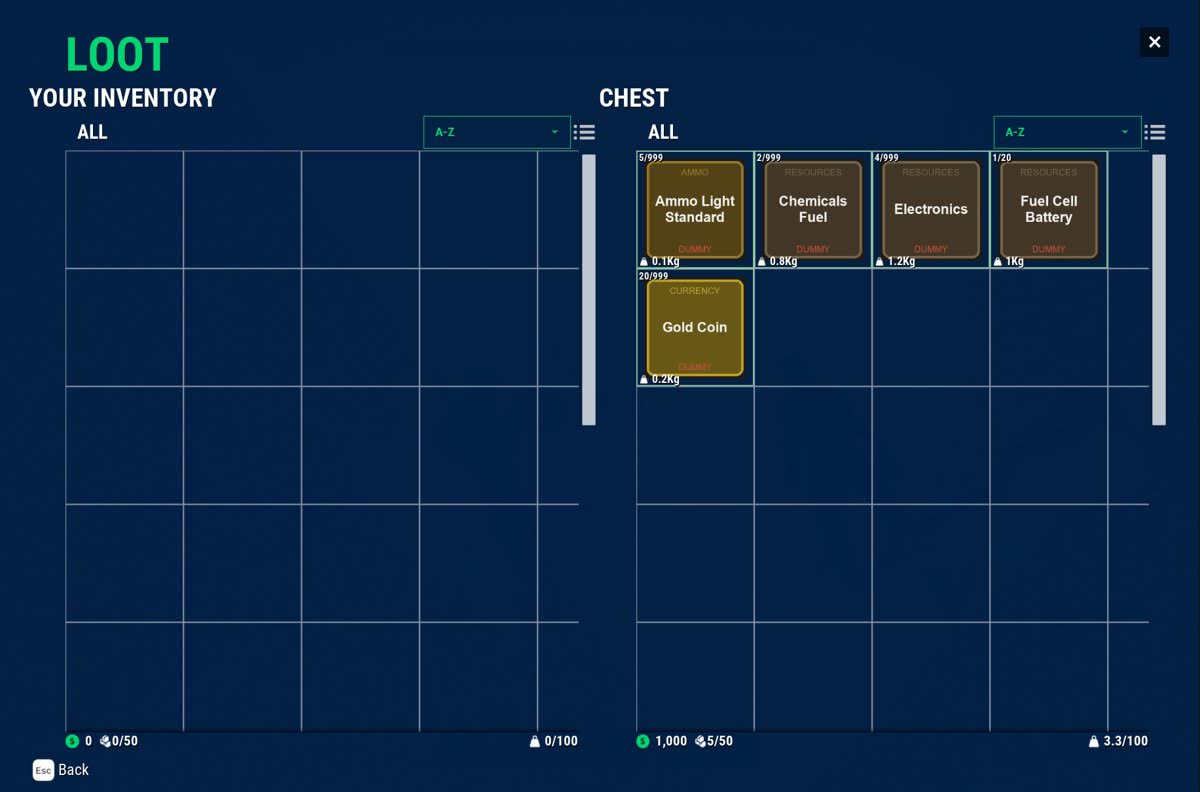
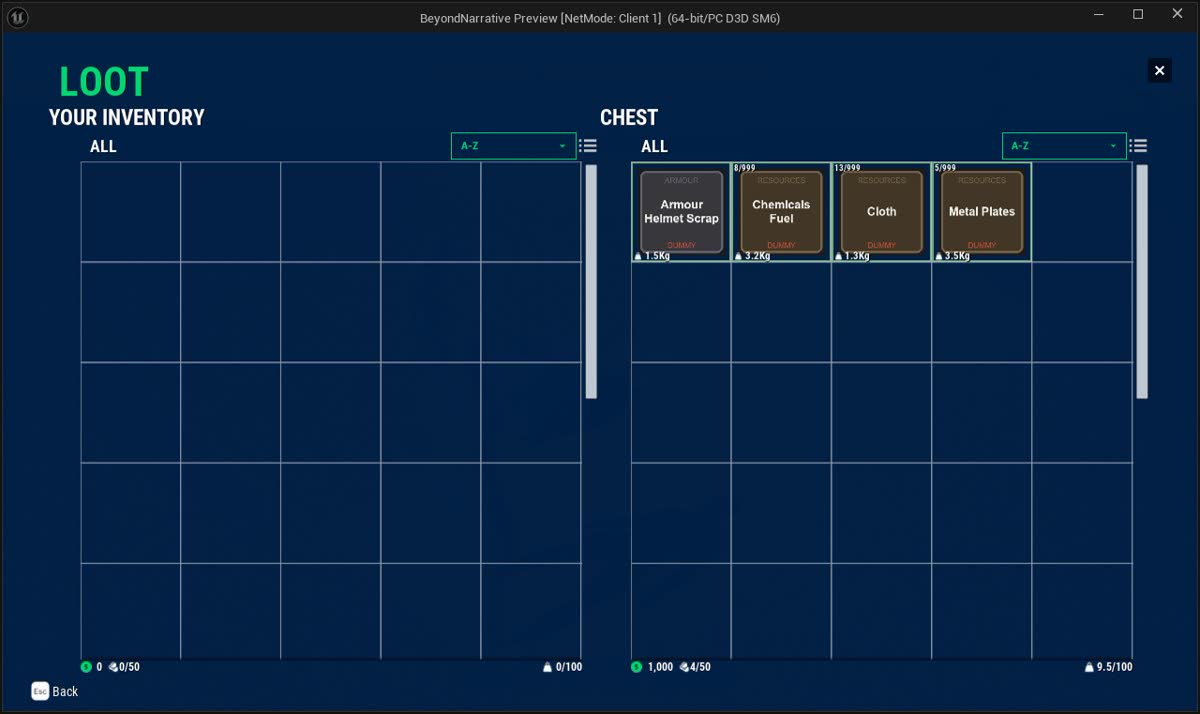
Loot crates were a working prototype before; now there are 295 of them scattered across the real map. Placing that many by hand wasn't practical, so they went in via a script that follows the roads and rail lines and deliberately keeps crates clear of both — nobody wants to find their best loot run blocked by a crate sitting in the middle of the highway. Each crate uses Narrative's own lootable-chest system under the hood, with our own layer on top: hold E to search, crates refill over time, and only one person can loot a given crate at once so two players can't both drain it simultaneously. I tested this both as the host and as a second player connecting in — items showed up correctly on both sides, and a looted crate did refill after a wait.
Crafting actually has a menu now
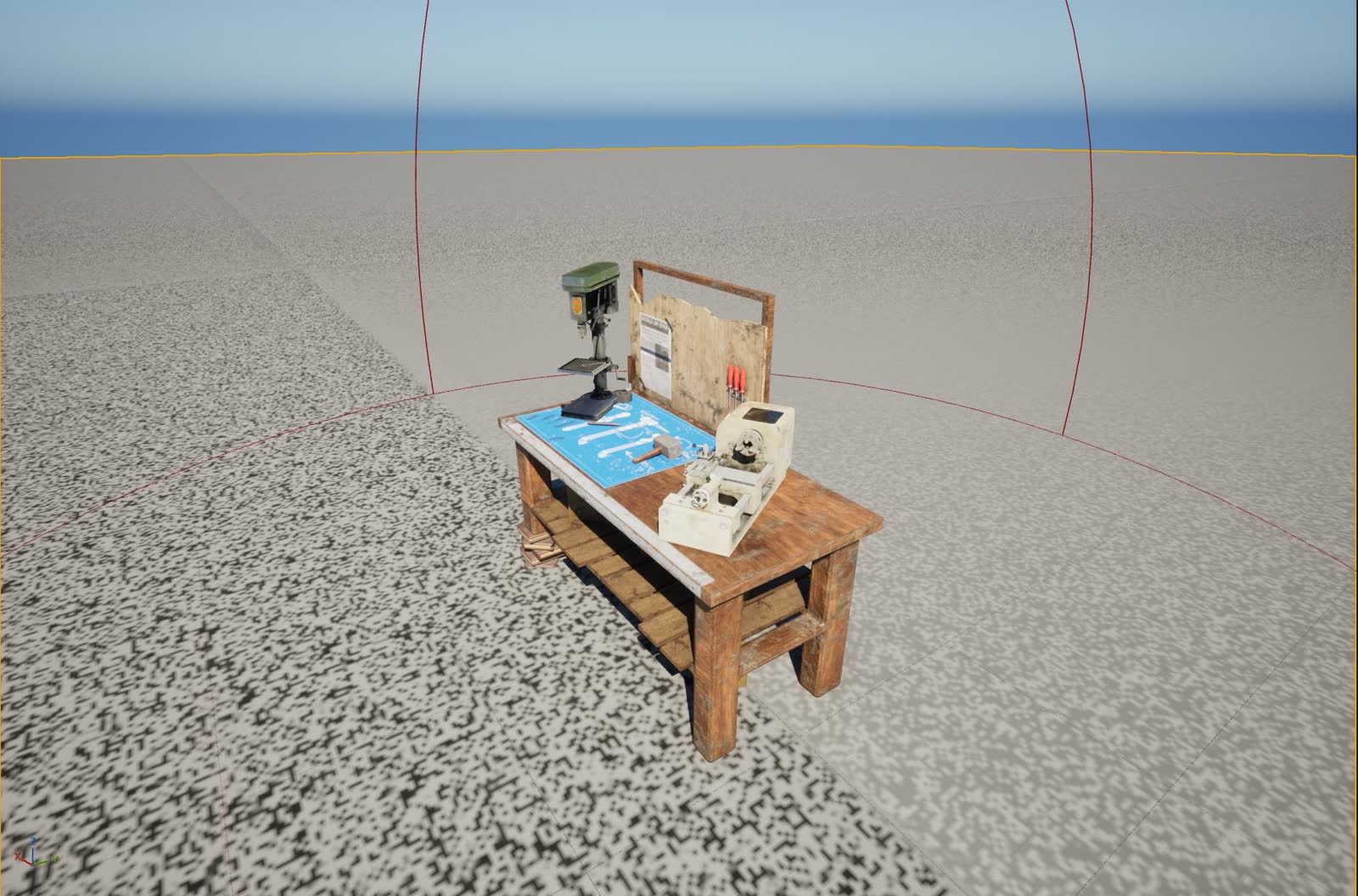
This is the biggest chunk of work this round: 11 separate crafting stations and 71 recipes between them. Workbench, Advanced Workbench, Furnace, Advanced Furnace, Campfire, Saw Bench, Chemistry Station, Cooking Station, Recycler, Repair Bench, and Generator — each one only shows the recipes that belong to it, so you're not scrolling past fifty irrelevant items to find the one thing you can actually make at a campfire. Speaking of which: the campfire now just does the basics (cook meat, grill fish, boil water) while the separate Cooking Station handles proper multi-ingredient meals, and refined fuel got moved over to the Chemistry Station where it makes more sense. The Advanced Workbench picked up a drill press and a lathe sitting on it, mostly for the look of the thing. One deliberate restriction: the satchel charge recipe isn't known by default — you have to find or unlock the blueprint first, so explosives aren't something every new player starts with.
On the quality-of-life side, the crafting menu now scrolls properly with the mouse wheel instead of needing arrow keys, and pressing the interact or inventory key now closes the menu the way you'd expect instead of only responding to Escape. Small thing, but it was annoying enough in testing to fix immediately.
A building hammer and the start of real icons
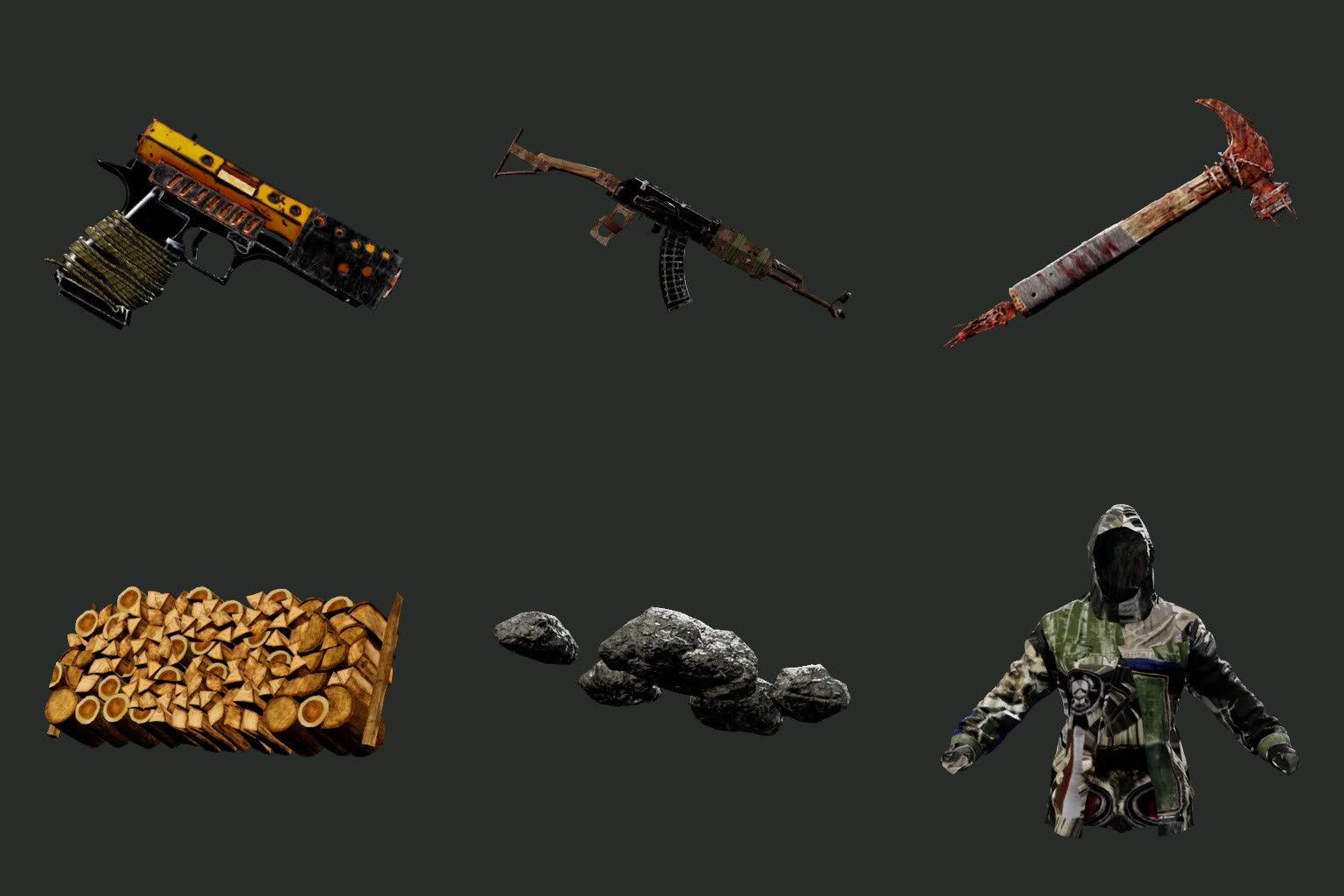
Picked a final look for the building hammer — spiked head, taped grip, properly scrappy — out of a shortlist of options. Also started building a proper icon pipeline instead of relying on generic auto-generated icons: fixed camera angle, fixed lighting, consistent framing rules so every item in your inventory looks like it belongs in the same game. Six sample icons went up for approval before committing to running the whole item list through it.
Health, hunger, thirst, and gas — the survival basics
The first wave of "Day 1" systems is in and compiling: health, hunger and thirst (needs), the gas zone system from last update, and the jammer that's meant to hide your base from enemy droids. Hunger and thirst tick down at a sensible rate in testing. The gas storm and jammer logic both exist in code now, but neither is actually placed anywhere on the map yet, so there's nothing to test in practice there until that happens.
Storage boxes, a locker, a bed, and code locks
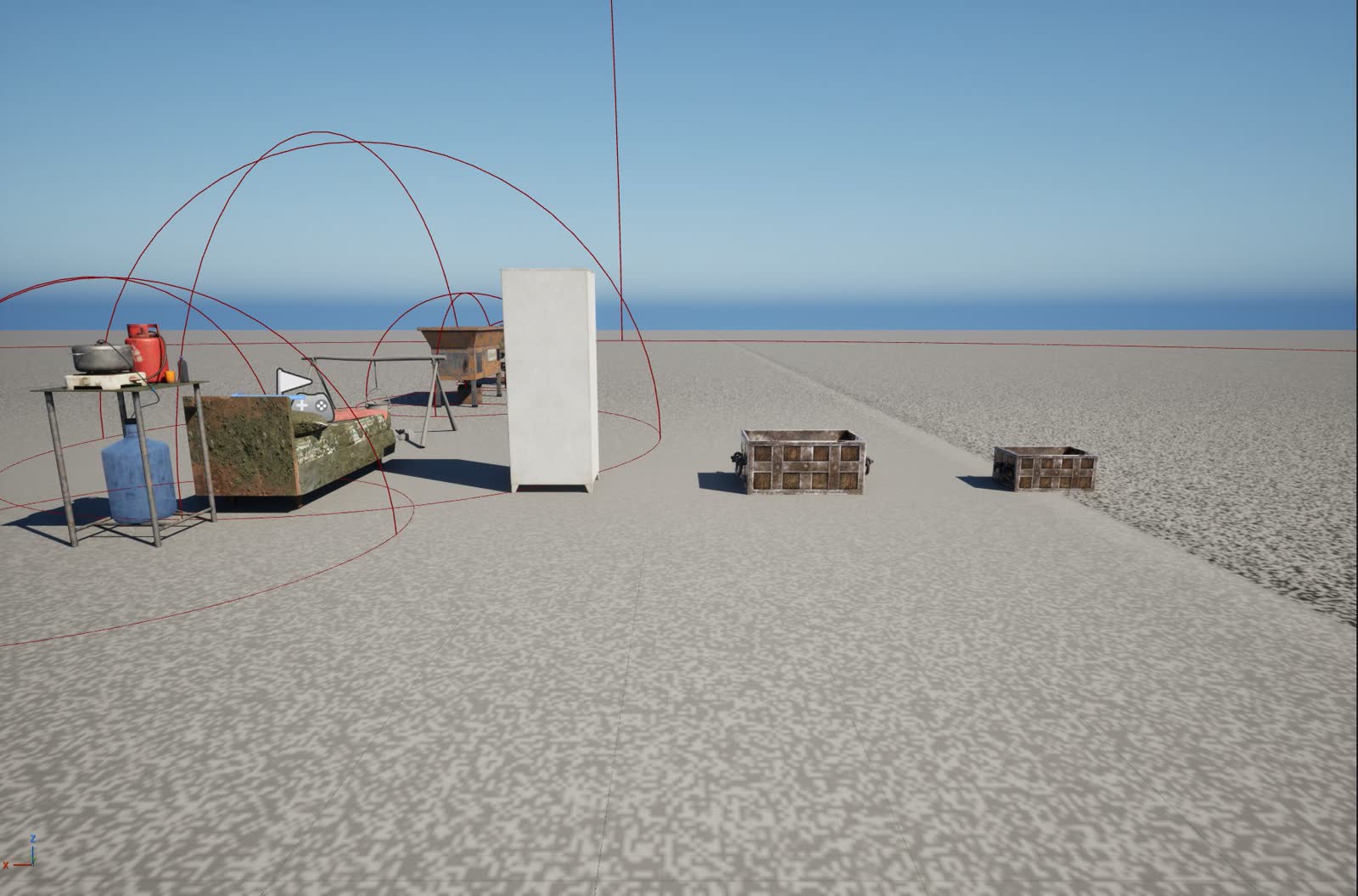
Deployables — the stuff you place down rather than build into walls — got rebuilt from scratch this round after the original approach ran into a dead end with a third-party plugin dependency that wouldn't compile the way we needed. The rebuilt version works as plain, self-contained actors: small and large storage boxes, a locker, a bed, and code locks for all of them. I tested the lock logic directly — installing a code, the owner opening it, a stranger being refused, wrong codes failing, the right code working — and it all checks out. The bed has a five-minute cooldown before it can be used again. What's missing still: you can't place any of these from your hotbar yet, that hookup hasn't been built.
Thirteen cars, and the first test drive
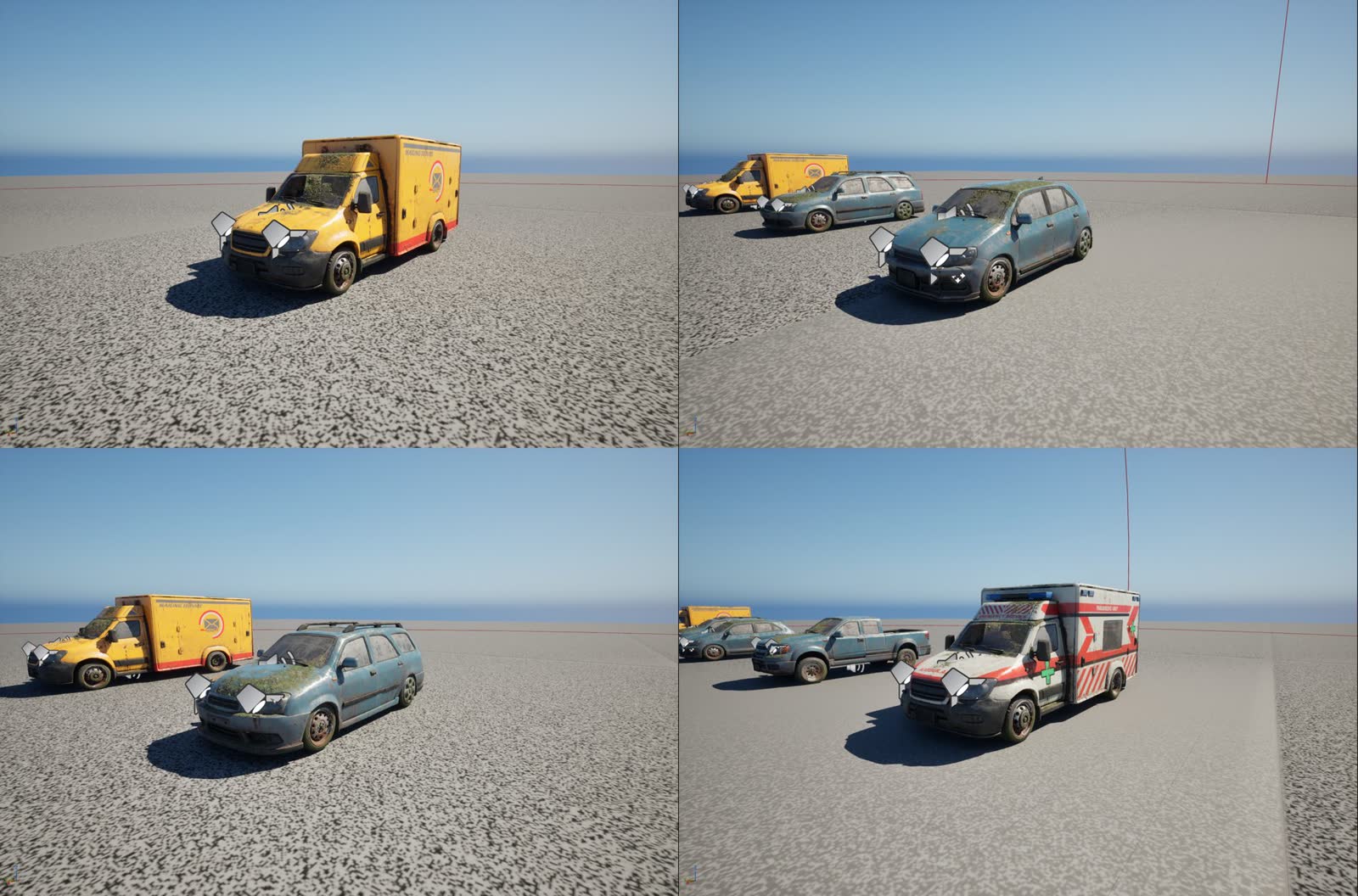
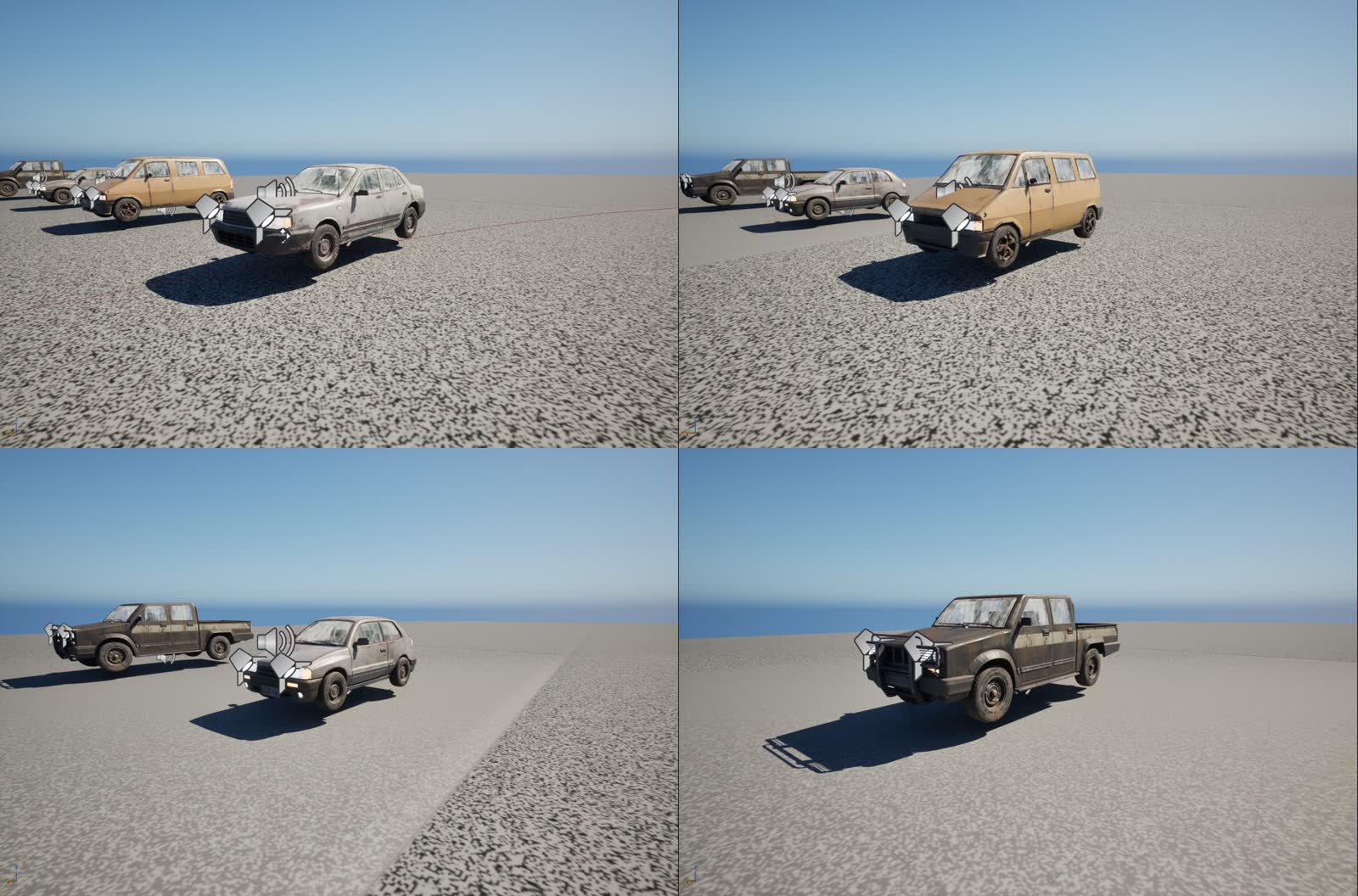
There are now 13 car blueprints in the project. Here's where things stand.
Five cars came from a post-apocalyptic vehicle pack — a pickup, hatchback, station wagon, ambulance, and post van — rebuilt to work with Narrative's vehicle system. They went through a few rounds of fixes: the cars were floating or sinking until a physics setting got corrected, leftover parts from the pack's demo sedan (extra wheels, glass) had to be stripped off, headlights needed moving onto each car's own lamp positions, and the post van's doors were showing up white (borrowed from the ambulance) until they got repainted to match the van's body colour.
Eight more cars came from a separate modular vehicle pack — ute, SUV, sports car, station wagon, sedan, van, hatch, and a tray-back pickup — built the same way: Narrative's driving system, the pack's own meshes and physics, seats wired in through Narrative's mount system so you can actually sit in them.
All 13 sit correctly on their tyres — no floating, no sinking through the ground. The first test drive turned up two bugs on the modular cars: on five of them the wheels stayed behind in the parking spot when the car drove off (the wheels were set to simulate their own physics instead of following the car), and every lamp glowed permanently because the pack ships its light glass switched on. Both are fixed; the wheels now ride with the car and the lamps are dark until something turns them on. Proper handling tests for all 13 are still to come, and brake lights and indicators that react to the driver are next on the car list.
A decision worth mentioning
I'm keeping the third-person camera for the rest of development, even though Beyond is meant to be a first-person game at release. It's just easier to see what's actually happening — character animations, building placement, whether a car is sitting right — while everything's still being built and tested. The switch to first-person-only is a later problem, not a now problem.
What's next
Short list of things that are planned but not built: car doors that actually swing open, a proper get-in animation instead of just teleporting into the seat, placing deployables from the hotbar, brake lights on the cars, and the recycler station (which exists as a placeholder right now with no actual recipes).
More soon — hopefully with at least one of those thirteen cars actually driven.
Loading comments...